Many of the world's religions bestow special status on people who demonstrate a life of almost perfect virtue. Religions differ on the title assigned to these people. The Catholic church calls them saints.
The process by which someone becomes a saint is called canonization. The Catholic church has canonized around 3,000 people -- the exact number is unknown because not all saints were officially canonized. According to the church, the pope does not make someone a saint -- the designation of sainthood only recognizes what God has already done. For centuries, saints were chosen through public opinion. In the 10th century, Pope John XV developed an official canonization process.
Advertisement
Canonization has been revised in the past 1,000 years, most recently by Pope John Paul II in 1983. Pope John Paul II, who canonized some 300 people, made several procedural changes to the canonization process, including the elimination of the "devil's advocate" from the review process. The devil's advocate was the person designated to attack the evidence offered in favor of canonization.
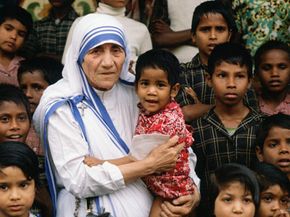
The process of becoming a Catholic saint is lengthy, often taking decades or centuries to complete. But it can also be "fast-tracked," for instance in the case of Mother Teresa of Calcutta, widely known for her work with the poor in India.
Soon after her death in 1997, Mother Teresa's followers began pressing the Vatican to waive the rule that prevents the process of canonization from beginning until five years after a candidate's death. This rule has traditionally been used to allow for a more objective look at a person's life and achievements. In 1999, the pope did waive the five-year rule, allowing the canonization process to begin.
To read about the specific steps in the canonization process, go to the next page.
Advertisement