What Exactly Is the Census and How Long Has It Been Around?

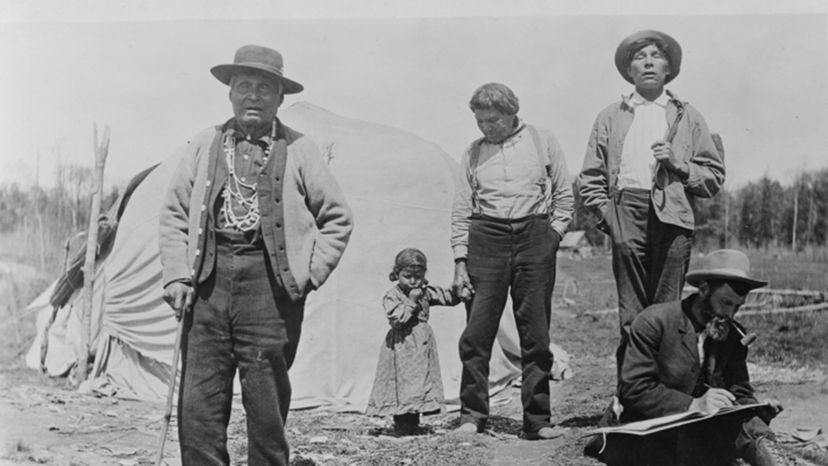
The concept of a census, or counting of residents, is an ancient one dating to Biblical times. The first census ever taken in North America, historians say, was in 1576, 200 years before America gained its independence from the British. Spanish King Philip II, who then ruled the large region, sent American Indians through what is now Mexico with a list of 100 questions. The Indians spoke no Spanish, so they recorded the answers in hieroglyphs (pictures) and made maps the same way. (They even showed one-way streets with footprints!)

Since 1790, national census information has been taken every 10 years (in years ending in zero) because it is mandated by the U.S. Constitution and necessary to determining each area's representation in the U.S. House of Representatives. In 1790, George Washington signed the act into law. (Interestingly, several states had been taking their own census earlier and continued to do so in non-zero-ending years.) While the Constitution describes the census simply as an "enumeration of inhabitants," the census has evolved over time into a more comprehensive -- and more useful -- process. Now, we can learn much more about our population than just the number of people living in the United States.

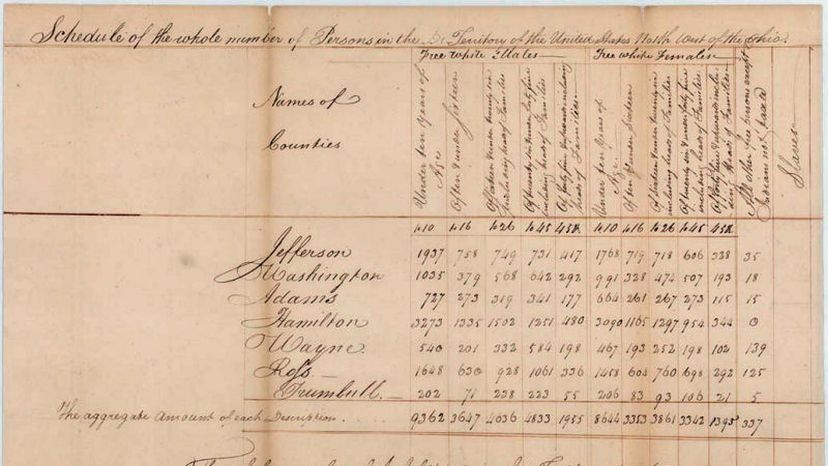
According to Judy Hanna Green's book Finding Treasures in the U.S. Federal Census in 1790, the population of the United States was just under 4 million -- not counting slaves or the untaxed Indians. (A primary goal of the first census was to provide information on men eligible for the military. On the heels of the Revolutionary War, the new American citizens were especially conscious of the importance of a strong military. Later, during the War of 1812, much of the 1790 census was destroyed by fire.)

In the first national census, 17 U.S. marshals appointed 200 assistants. They rode on horseback all over the nation to count people, writing with quill pens (Read more about pen history at How a Ballpoint Pen Works!) on any scraps of paper they could find. The cost of that census project was $45,000!

The First National Census

States included in this census were Connecticut, Delaware, Georgia, Kentucky, Maine, Maryland, Massachusetts, New Hampshire, New Jersey, New York, North Carolina, Pennsylvania, Rhode Island, South Carolina, Tennessee, Vermont and Virginia.

Questions Asked:

  • Name of head of household
  • Address
  • Free white males, 16 and older, including head of family
  • Free white males under 16
  • Free white females, including head of family
  • All other free persons
  • Slaves
Source: Finding Treasures in the U.S. Federal Census by Judy Hanna Green

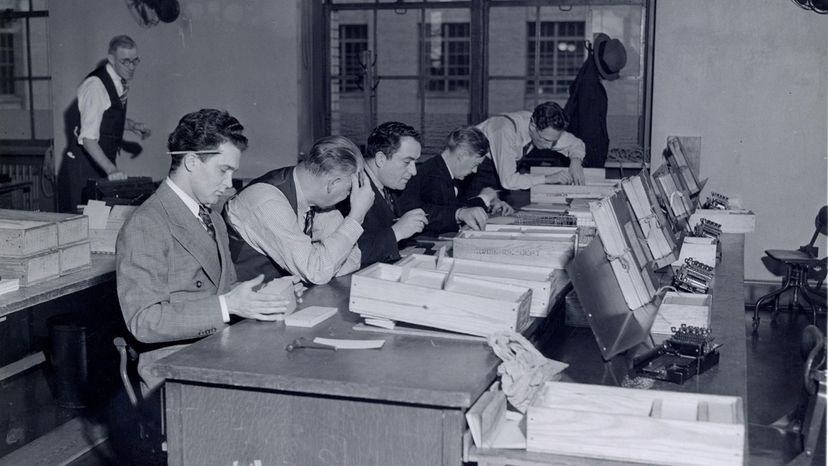
Technology began to become part of census taking in 1890. The Census Bureau developed a new electrical machine that could add up responses to questions after census workers punched holes in the right places for each answer. Cards were then fed into a machine that totaled the result. It was bulky but a great advance at that time -- anything that sped up the process was a help since some of the results must be ready nine months after Census Day (more about that later).

The first modern computer, called ENIAC, was invented in 1946 at the University of Pennsylvania. This computer, which was really many machines working together, took up a whole room. The system was ready in time for use in parts of the 1950 census, and the Census Bureau ordered its own computer, called UNIVAC. That technology has improved over the years and now high-speed, supercomputers are available to assist the census.

Today, this technology plays a major role in the processing and census data. The major automation features for Census 2000 include data capture systems designed to handle the use of "respondent-friendly" questionnaires. The Census Bureau uses the National Processing Center and works with contractors who operate three processing centers responsible for a variety of data capture functions:

  • A full electronic data capture and processing system records an image of every questionnaire.
  • Questionnaires returned by mail will be sorted automatically to ensure timely capture of critical information needed before the non-response follow-up.
  • Optical mark recognition will be used for all check-box data items.
  • Intelligent character recognition (ICR) will be used to capture write-in character-based data items.
  • A clerical keying operation will capture and resolve difficult ICR cases.
  • A quality assurance review will be conducted on data keying and scanning activities.

Census Bureau officials say the use of electronic imaging and captured data in 2000 reduced the logistical and staffing requirements that accompany handling large volumes of paper questionnaires.

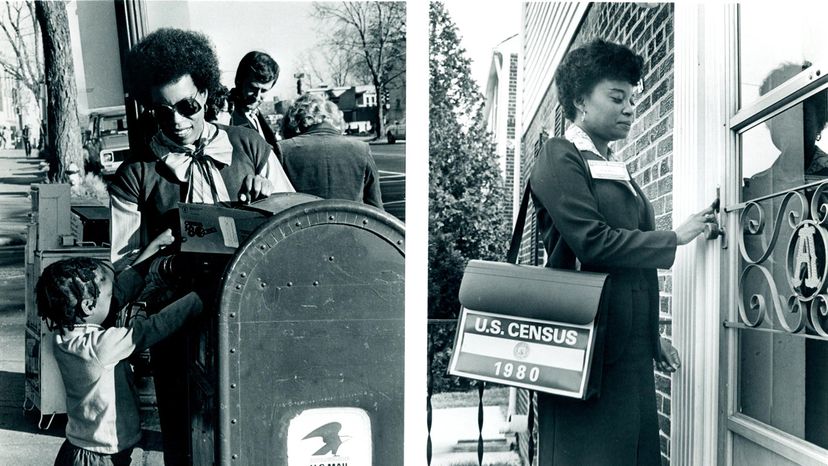
Most of the U.S. Census was taken door-to-door until 1960, when census officials recognized the inefficiency of this method in dealing with such a fast-growing, increasingly diverse and mobile population. That's when they decided to use the mail to distribute forms. In the 1970 census, about 60 percent was taken by mail, and in 1980, about 90 percent. However, in 1990, when the Census Bureau tried to take about 94 percent of the census by mail, one in three households failed to return the forms. That's why the most recent decennial census was the focus of a major, nationwide awareness campaign, officials say.

But neither technology nor mail have replaced the all-important census team members. Among the thousands of workers today are:

  • Administrators -- They determine how each division of the Census Bureau will do its part in the census.
  • Enumerators -- They go door-to-door to gather information from residents who have not returned their census forms.
  • Statisticians -- They make sure the Census Bureau's math is right.
  • Demographers -- These people understand the statistics and have studied what statistics tell about American life. They analyze the census numbers, comparing them with numbers from earlier censuses, and tell us important things about the future.