
History of Piracy
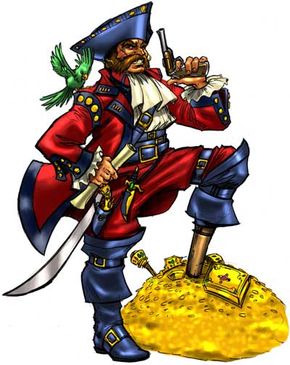
Piracy has existed for as long as people have used boats to move cargo. Here's a brief overview of how piracy has existed through history:
- Ancient texts describe the Lukka, who attacked boats off the coast of what is now Turkey, as early as the 14th century B.C.
- Piracy was common off the coasts of ancient Greece and Rome until Roman leader Pompey orchestrated a massive anti-pirate campaign around 67 B.C. Various sources claim that as many as 10,000 pirates died.
- In the 15th and 16th centuries, for example, corsairs robbed and plundered in the Mediterranean Sea. These pirates operated out of North African ports on the Barbary coasts -- for this reason, they were known as Barbary Pirates.
- From the late 1500s to the 1600s, pirates preyed on the large Spanish galleons that visited the American coast, known as the Spanish Main, twice a year. These galleons dropped off supplies for the colonies and picked up gold and silver to take back to Spain.
- In the 17th century, buccaneers used Port Royal, Jamaica and the island of Tortuga to attack Spanish trading ships in the Caribbean Sea.
In general, piracy has been prevalent in all parts of the world that have relied heavily on sea trade. For example, Chinese texts record pirates in the South China Sea beginning with the end of the Han Dynasty in 220 B.C.
Advertisement
But these historical pirates didn't really resemble the swashbuckling, aquatic Robin Hoods many people imagine when they think of pirates. Today, the word "pirate" conjures up a pretty specific image of a man with:
- An enormous ship with lots of cannons and sails, as well as a flag bearing a skull and crossbones
- A tricorne (three-cornered) hat or a bandanna
- An extravagant, knee-length coat
- A blousy shirt with lace or ruffles at the collar and cuffs
- Knee-high boots with cuffs
- Hoop earrings
- Leathery skin and lots of scars
- A cutlass, daggers and flintlock pistols
- A peg leg or a hook in place of a hand
- A pile of treasure
- A map that leads to the treasure, on which X marks the spot
- A parrot
This modern concept of the quintessential pirate comes from two primary sources: The Golden Age of Piracy, which lasted from the mid-1600s to the early 1700s, and books like "Treasure Island" and "Peter Pan."
We'll look at each of these in more detail in the next section.