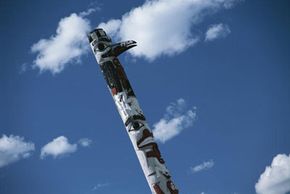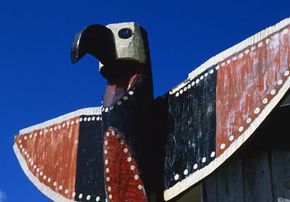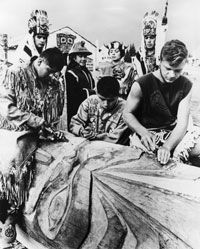
For many of us, the thought of totem poles conjures up images of sacred rituals and mysterious ceremonies. In reality, the ideas that many people hold regarding these organic works of art couldn't be further from the truth. Rather than objects of worship or ritual, totem poles are -- in simplest terms -- really tall, wooden family histories.
Alaska Image Gallery
No one knows for sure when the first totem poles were created [source: Smithsonian]. What we do know is that they began as an artistic expression of American Indians on the Pacific Northwest Coast of North America. Many historians believe that totems originated within the Haida tribe, which lives in southeastern Alaska. Tribes in the northern portion of Washington state and coastal British Columbia followed suit.
Advertisement
Archaeologists also believe that, while totem poles as we know them today didn't start being carved until the late 1700s, the same images and stories that they depict existed for hundreds (or possibly thousands) of years on smaller objects, like combs and masks. Totem poles became much more common after Europeans came to the New World. When European settlers first laid eyes on totem poles in the 1700s, they were a little frightened. Since totems were nothing like they'd ever seen before, the settlers could only guess what these strange objects were for. This gave rise to many myths about totem poles. British captain James Cook described them as "truly monstrous figures" [source: NPR].
But Europeans actually brought about an increase in totem production. They brought sophisticated metal tools with them that made it much easier for American Indian carvers to practice their art on larger pieces of wood. Thus, totems grew from the size of a walking cane to the towering works of art that we have come to know and enjoy. Interestingly enough, Europeans even tagged the art form with the name "totem poles."
What do the symbols on totem poles mean? How long does it take to make a totem pole? And why does a custom-made totem cost nearly as much as a new car?
Advertisement