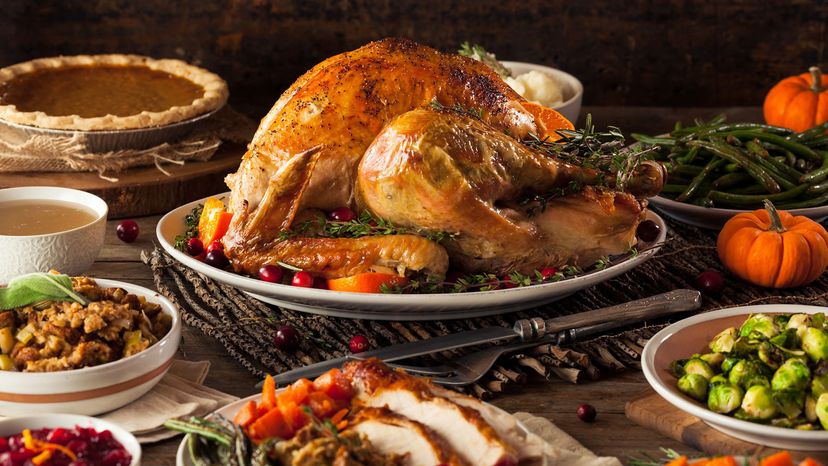
Have you ever wondered why Americans gather around the table each year and prepare to eat food regarded as traditional, but rarely assembled as a meal the rest of the year? Turkey, gravy, corn, stuffing, cranberries and pies take center stage on Thanksgiving.
But Thanksgiving also stands out from other American holidays in the sense that it isn't tied to any specific religion, and you can pretty much celebrate it however you want. The only essential traditions are to enjoy a meal with friends or family and to give thanks for what you have. In the pantheon of holidays, Thanksgiving is about as simple as it gets.
Advertisement
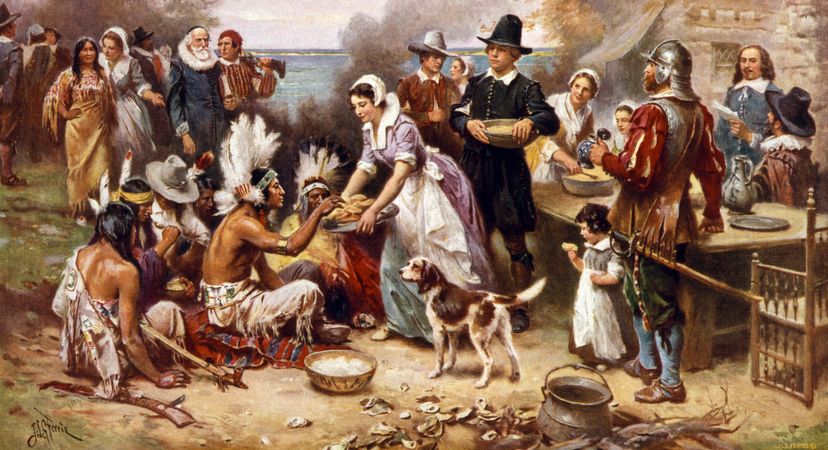
The holiday also honors American history, of course. In countless Thanksgiving plays, American children have told the story of the first Thanksgiving when the Pilgrims and the American Indians celebrated the autumn harvest in cooperation and acceptance.
Have you ever wondered where the particulars of this story and the other details of Thanksgiving actually come from? In this article, we'll look at the origins, traditions and history of Thanksgiving, as well as how turkeys came to symbolize the holiday. We'll also examine how other cultures celebrate Thanksgiving.
Advertisement