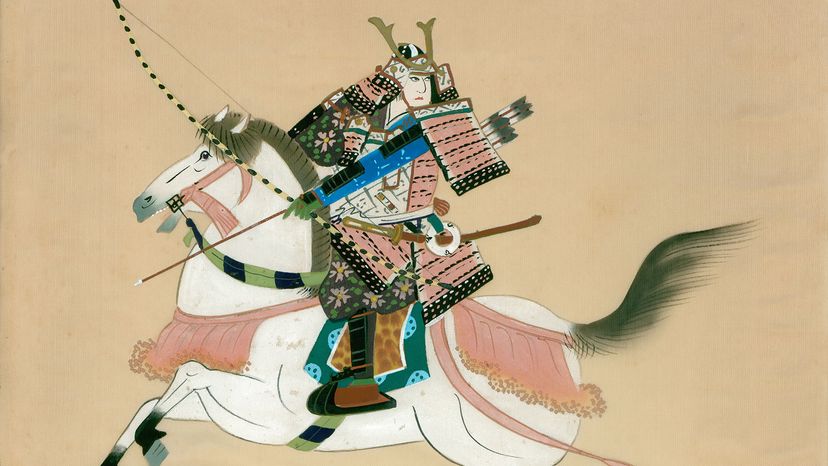
A samurai rides a horse in this Japanese painting on silk. The Print Collector/Print Collector/Getty Images
The samurai were the legendary armored swordsmen of Japan, known to many Westerners only as a warrior class, depicted in countless martial arts movies. While being a warrior was central to a samurai's life, they were also poets, politicians, fathers and farmers. Samurai played a pivotal role in the last 1,500 years of Japanese history. In fact, samurai were instrumental in Japan's history from the 12th to the mid-19th centuries.
The samurai (the word is the same whether singular or plural) served many functions in Japan. However, the role in which they are best known is that of warrior. But what is it that makes a samurai different from other warriors in other parts of the world? Wearing armor and using a sword is not enough to make someone into a samurai.
Advertisement
Although the samurai and the role they played in Japan changed throughout the centuries, there are four factors that generally defined the concept of the samurai:
The samurai was a well-trained, highly skilled warrior.
The samurai served his daimyo or master, with absolute loyalty, even to the death. In fact, the word samurai means, "one who serves."
The samurai was a member of an elite class, considered superior to common citizens and ordinary foot soldiers.
The samurai's life was ruled by bushido, a strict warrior code emphasizing honor.
In this article, we'll examine the strict warrior code of the samurai, the honor system that shaped their lives, the weapons and armor they used, and the history of the samurai, from their murky origins in the fifth century to the abolition of the samurai class in 1868. We'll also find out how much of what we know about samurai is truth or myth.
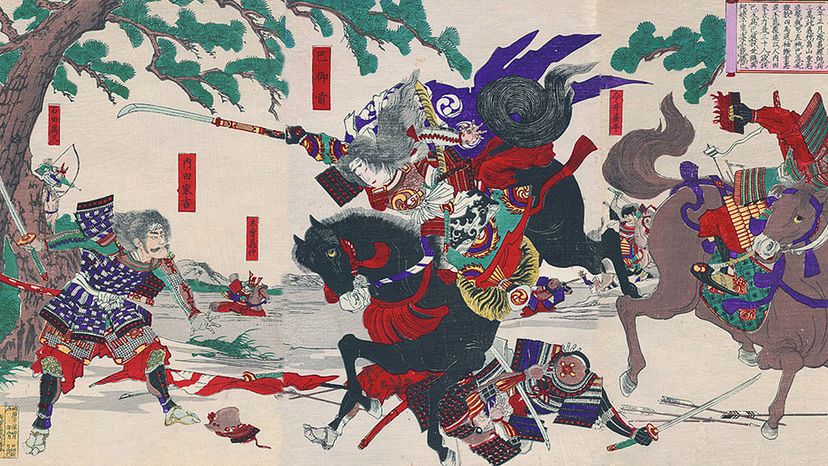
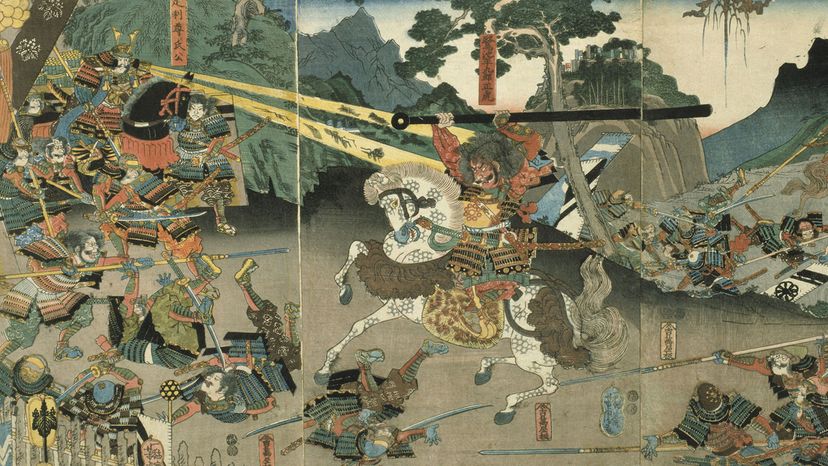
Female samurai Tomoe Gozen (known for her bravery) kills samurai Uchida Ieyoshi and escapes capture. Although most samurai were men, there were several female samurai. History/Universal Images Group via Getty Images
Children of samurai families were taught to serve different roles in samurai societies. Part of their education may have been formal, but they also learned social values from their families and others in their tight-knit communities. Girls were taught to run samurai households as future samurai wives, while boys were trained to take over as heads of families and as warriors. Rather than a simple question of age, a boy's readiness to be a samurai depended on rites of passage he had to undergo to advance.
Training in martial arts began at a young age. Sons of wealthier families were sent to special academies, where they were tutored in literature, the arts and military skills. It should be noted that there were some female samurai, who also participated in combat, but most of the samurai were men.
Advertisement
The image of the samurai that is probably most familiar is that of a sword master wielding his curved katana with deadly skill. However, for the first few centuries of their existence, samurai were better known as horse-riding archers. Firing a bow while riding a horse was a difficult task, and mastering it required years of constant practice. Some archers practiced on targets tethered to a pole, which could be swung to make a moving target. For a time, living dogs were used as moving archery targets, until the shogun abolished the cruel practice.
Swordsmanship was taught in a similarly relentless manner. One story tells of a master who would strike his students with a wooden sword at random times throughout the day and night, until the students learned to never relax their guard.
In addition to warrior skills, samurai were expected to be well-educated in other areas, such as literature and history. During the Tokugawa period, a peaceful era, the samurai were not needed much as warriors, so these academic skills were especially useful. However, some samurai masters warned their students not to dwell on words and paintings too much, fearing their minds would become weak.
Advertisement
Samurai Armor
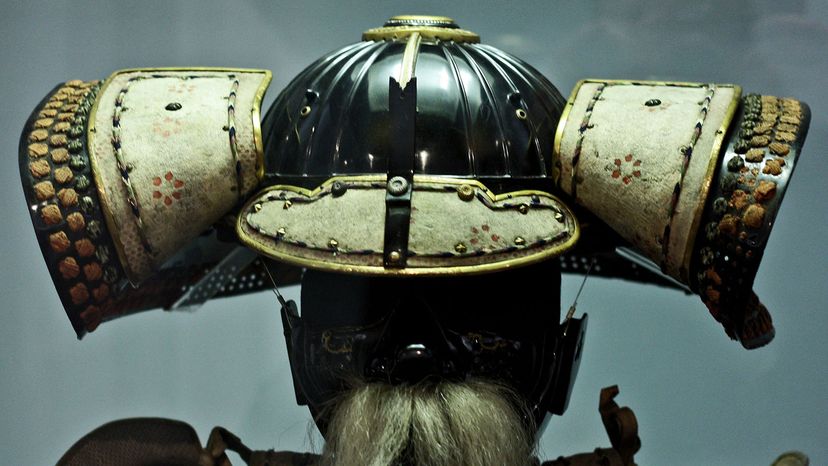
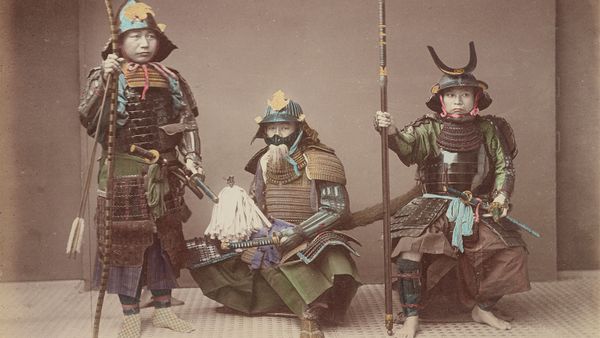
A samurai helmet and mask from the mid-19th century. Universal History Archive/Universal Images Group via Getty Images
A samurai was instantly recognizable due to his distinctive armor and helmet. Although early samurai armor (fifth and sixth century C.E.) exhibited a solid-plate construction, it was the lamellar armor that came next that continued to represent the samurai image today. Lamellar armor was made by binding together metal scales into a small plate, which was then covered with lacquer to make it waterproof. These small, light plates were fastened together with cords of leather, each plate slightly overlapping the other. Originally, there were two basic types of lamellar armor:
Yoroi: Worn by mounted samurai, this heavy armor included heavy helmets and imposing shoulder guards.
Much later, as samurai dismounted their horses and hand-to-hand combat became more prevalent, the do-maru style armor became more popular among all samurai. Do-maru were modified to include heavy helmets and lightweight shoulder and shin guards.
Advertisement
Helmets, called kabuto, were made from metal plates riveted together. In many designs, the rivets formed rows of ridges along the outside of the helmet, adding to their distinctive look. Higher-ranking samurai added clan symbols and other decorative flourishes to their helmets. Some helmets included metal masks bearing intimidating devil faces, sometimes with mustaches and beards made from horsehair. During peaceful periods, these helmet ornaments grew very elaborate, and today are considered works of art.
Before donning his armor, a samurai would wear a one-piece undergarment covered by a kimono and a pair of loose-fitting pants called hakama. A padded cap would help ease the weight of the heavy iron helmet.
Advertisement
Samurai Weapons
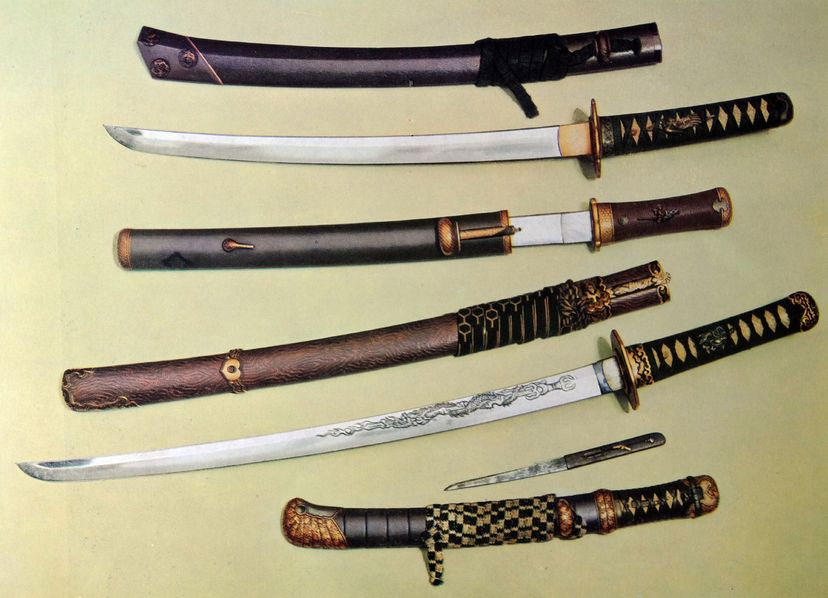
A collection of 14th-century samurai swords is displayed, including the katana, wakizashi and tanto. Universal History Archive/Universal Images Group via Getty Images
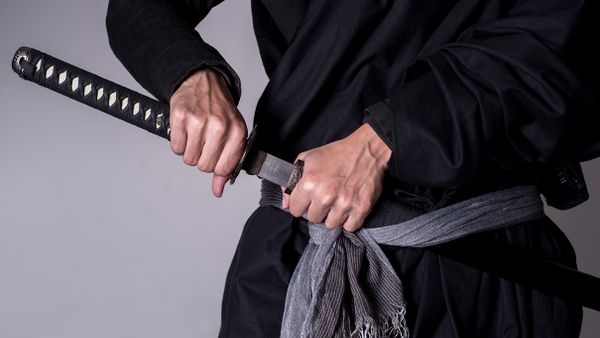
The most famous weapon associated with the samurai is the katana, a curved sword. A katana was never worn without its companion sword — the wakizashi, a shorter weapon with a broader blade. Together the two swords were referred to as daisho, meaning "large and small." The word dai (large) represented the katana and the word sho (small) represented the wakizashi.
The smiths who created katana for the samurai are widely regarded as some of the finest sword makers in history. One of the biggest problems in making a sword is keeping it sharp. A weapon made with a hard metal will keep its edge but will be brittle and more prone to breaking. Japanese smiths solved this problem by controlling the amount of carbon in the tamahagane steel very carefully. As they heated and cooled the metal during the process, they folded it back on itself many times to create multiple layers. The result is renowned the world over for its strength and sharpness.
Advertisement
In addition to swords and bows, samurai used a variety of pole arms (bladed weapons attached to long poles). One of the more common Japanese pole arms was the naginata, which consisted of a sharp blade 2 to 4 feet (0.6 to 1.2 meters) in length mounted on a wooden shaft that was 4 to 5 feet (1.2 to 1.5 meters) long. The extra reach afforded by these weapons allowed infantry to hold attackers at bay or make a first strike before an attacker with a sword could reach them. They were also very effective against mounted opponents.
In the 16th century, European traders arrived in Japan for the first time. The Japanese paid large sums for Portuguese arquebuses, a type of matchlock gun, quickly learning to mass-produce the weapons themselves. Although the gun is not traditionally associated with samurai, it was a major influence on Japanese warfare from that point on. Ranged attacks became more common, and samurai were encouraged to carry the unreliable weapons. The more trustworthy sword was only needed for close combat.
Advertisement
Bushido: The Samurai Code of Honor
The samurai were not mercenary warriors, roaming Japan and fighting for whatever warlord would pay them. They were bound to a specific lord or daimyo, and bound to their communities by duty and honor.
This code of honor is known as bushido, and comes from the word bushi, which means "warrior." The Japanese word do means "the way." So bushido means, "the way of the warrior." This code evolved from an earlier period when samurai were archers and horsemen. The training and devotion needed to master these skills and bond with a horse led to kyuba no michi, "the way of the horse and bow."
Advertisement
Although bushido is referred to as a code, it was not a formal set of rules that all samurai followed. In fact, bushido changed greatly throughout Japanese history and even from one clan to the next. Bushido wasn't written down at all until the 17th century, after samurai had been in existence for centuries.
The first duty of a samurai was loyalty to his lord. Japan had a feudal system in which a lord expected obedience from his vassals, who in turn received economic and military protection from the lord. If a lord couldn't count on absolute loyalty from his vassals, the entire system would collapse. This sense of loyalty and honor was often carried to extremes by the samurai, who would fight to the death in a hopeless battle to protect their master's castle or commit suicide if they felt they had disgraced their lord.
Samurai also had a duty of vengeance. Should his master be killed, a samurai was justified to seek out and kill those responsible, although he was required to tell the authorities of his plans before he acted. One of the most famous samurai stories, "The 47 Ronin," or masterless samurai, is a tale of traditional samurai vengeance. During a period of peace, their lord was ordered to commit seppuku (ritual suicide) because of an altercation with another lord. Two years later, the 47 samurai invaded the lord's castle and killed him. After that they surrendered to the authorities. Although they had fulfilled their duty of vengeance (as was expected), they had been forbidden to do so beforehand by the shogunate. Because the public was on their side, the samurai were allowed the honor of committing seppuku, rather than being executed for their crime.
Samurai and Zen
The native religion of Japan was Shintoism , but after Buddhism reached Japan in the fifth century, C.E., it attracted many followers. There was no conflict between the two. In fact, Buddhist and Shinto beliefs coexist easily. One school of Buddhist teaching, Zen Buddhism, encourages followers to attain enlightenment through intense meditation and contemplation of seemingly nonsensical questions. This discipline was popular with samurai, who understood the need to train and practice until their combat skills became like breathing; something they did naturally, without having to think about it.
Advertisement
Seppuku
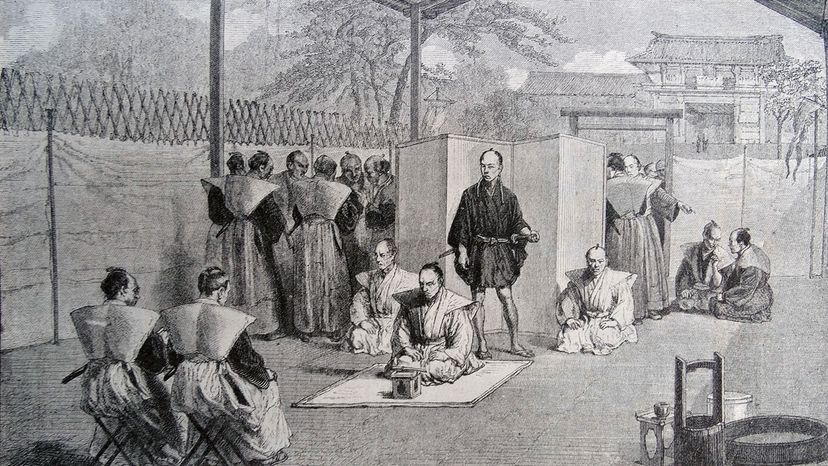
A kaishaku stands behind a samurai who is about to commit seppuku, a form of Japanese ritual suicide by disembowelment. The kaishaku's job was to behead the samurai after he had made the first cut on himself, thereby sparing him an agonizing death. Universal History Archive/Universal Images Group via Getty Images
Honor was so important to the samurai that they would take their own lives in the face of failure, or if they had violated Bushido. This honor-bound suicide became very ritualized, taking the form of seppuku. Also known by the more vulgar phrase hara-kiri, seppuku was a way for a samurai to restore honor to his lord and family, and to fulfill his obligation of loyalty even if he had failed as a samurai.
Ritualized seppuku involved the samurai wearing the proper garments while he was presented with the ritual sword, wrapped in paper. The samurai would then take the sword and cut open his own stomach, from left to right, with a final upward cut at the end. However, seppuku was not a solitary act, and few samurai were left to die a slow and excruciating death from disembowelment. Another samurai acting as an assistant or kaishaku, would typically stand behind the one committing seppuku, and behead him with a sharp sword shortly after the seppuku cut was made. The kaishaku was charged with making sure the ceremony proceeded smoothly, and a samurai should consider it an honor to be called to serve as kaishaku.
Advertisement
In later years, the act became even more ritualized, in some cases using paper fans to signal the kaishaku he was ready for decapitation. Often, the kaishaku would perform the beheading as soon as the ritual sword was touched, well before any pain was experienced.
History of the Samurai
A battle scene from the series "The Forty-seven Faithful Samurai" by Utagawa Yoshitora, 19th-century Japanese artist and printmaker. Universal History Archive/Getty Images
No one is quite sure who the first samurai was. Historians do have some idea of when regular warriors began taking on the characteristics of the samurai. In the fifth, sixth and seventh centuries, C.E., there were rivalries in Japan between princes and clans, as well as succession wars when an emperor died. However, most of the fighting was done against those people who were native to islands of Japan, which imperial Japanese referred to as emishi or barbarians.
Some emperors realized that the emishi were good fighters and in later years, emishi were recruited to fight in battles against other clans or rebellious religious orders. Some of the military tactics and traditions of the emishi were incorporated by Japanese soldiers and were later used by the samurai.
Advertisement
The samurai's status as an elite class comes from the proliferation of powerful families that lived far from the capital, passing their land and their prestige, from one generation to the next for hundreds of years. The members of these warrior houses or clans attained noble status.
Barbarian military traditions combined with elite status and the kyuba no michi warrior code to form a template for the earliest samurai. By some reports, the word samurai first appeared in the 12th century. For a long time, the samurai provided the main military force used against emishi and other clans.
In the 1100s, two powerful military clans served the emperor of Japan: the Taira clan and the Minamoto clan. These two families became bitter rivals and in 1192, Minamoto Yoritomo led his clan to victory over the Taira. The emperor, the traditional head of the Japanese government, declared Minamoto Yoritomo shogun, the head of the military. However, Yoritomo used his new power to strip the emperor of all political power, make his position as shogun permanent, and set up a military dictatorship known as bakufu. So, the samurai went from being servants to the land-owning daimyos to being the rulers of Japan under the shogun.
After Yoritomo died, his wife, Masako, became a nun. Through her family, however, she still had influence over the government. Though not perfect, her family, the Hojos, maintained control over Japan for over 100 years.
The Ashikaga clan wrested control from the Hojos in 1338. The Ashikagas failed to provide a strong central authority in Japan, and the clans descended into constant fighting. During this period, the daimyo built impressive castles with walls, gates, and moats that made them difficult to attack.
This sengoku, or civil war period lasted until Tokugawa Ieyaso took control of Japan in 1603. Tokugawa enforced a strict isolationist policy, and kept control of the daimyos by forcing their families to live in the capital, while the daimyo himself lived on his estate. Each daimyo was required to visit the capital at least once per year (daimyos who fell into disfavor were given estates far from the capital, making the trip much more expensive and time-consuming). This policy ensured the control of the daimyos because their families were basically held hostage, and the expensive annual trips prevented them from gaining too much economic power.
Tokugawa also banned the carrying of swords by anyone but samurai. All swords owned by non-samurai were confiscated and melted down to make statues. This marked the samurai as a very distinct and noticeable class, above the common citizen.
During Tokugawa's enforced peace, samurai were seldom used in combat. It was during this period that the samurai took on other roles, escorting their lords back and forth from the capital, working as bureaucrats in the bakufu and collecting tribute in the form of rice payments from the daimyo's vassals.
Armor Glossary
Do - the main torso armor, which hangs from the shoulders.
Tsurubashiri - leather covering on the do, sometimes with elaborate and colorful designs.
Sendan-no-ita, kyubi-no-ita - small armor plates which hang from the shoulders and protect the cords that hold the rest of the armor together.
Kote - armored sleeve, only worn on the left arm, leaving the right arm free to fire a bow. This practice of leaving the right arm unarmored was continued out of a sense of tradition long after samurai no longer relied on archery in combat.
Advertisement
The End of the Samurai
Tokugawa and his descendants ruled over a peaceful Japan for two and half centuries, known as the Edo Period. All foreign influences, whether missionaries or traders, were banned. The role of the samurai in peacetime declined gradually over this period, but two factors led to the end of samurai: the urbanization of Japan and the end of isolationism.
As more and more Japanese moved to the cities, fewer farmers produced the rice needed to feed the growing population. The luxurious living enjoyed by the shoguns and many daimyos started to wear away at the economic system. Many Japanese, including lower class samurai, grew dissatisfied with the shogunate because of the worsening economic conditions.
Advertisement
Then, in 1853, U.S. ships sailed into Edo Bay. Commodore Matthew Perry had arrived to deliver a message from President Millard Fillmore to the emperor (who still existed as a figurehead, even though the shogun really ruled the country). Fillmore wanted to open trade relations with Japan, wanted shipwrecked U.S. sailors to be treated well by the Japanese and wanted to open Japan as a resupply port for American ships. In exchange, his ships would not bomb Edo. Perry delivered his message, told the Japanese he would return after a few months, and left.
In Perry's wake, a split grew in Japan. Some wanted to deny the American offer, maintain isolationism and stay with their ancient traditions. Others, however, realized that Japan could never stand up to the better technology of the westerners. They proposed opening up Japan to learn everything they could from the Americans, ending isolationism and becoming a world power. Ultimately, the bakufu decided to open Japanese ports for American resupply, and later to trade.
The emperor refused to agree to the treaty. But he was just a figurehead, and the bakufu went ahead with the treaty anyway. Several groups of rebellious samurai, who wanted Japan to stay the same, supported the emperor and began a civil war against the bakufu. Surprisingly, the bakufu overthrew the shogun, ending the Tokugawa period and restoring the emperor to power. Lower class samurai took positions of leadership, controlling the government from behind the new emperor, a young boy who was called Emperor Meiji. This event is known as the Meiji Restoration.
The power of the daimyos was taken away as the government seized their land. With no one to pay the many samurai, the government decided to pay them with bonds based on their rank. This affected low- and high-ranking samurai differently but had the same result — each class either used the bond to invest in land or start a business or realized they didn't have enough income to support themselves, and returned to the land as farmers or to the cities as workers. The samurai no longer had a role in Japan.
Finally, in 1876, the emperor banned samurai from wearing their swords, leading to the creation of a drafted standing army. The final bell had tolled for the samurai — they no longer existed officially. Though there were some rebellions as samurai in outlying provinces resisted, all the samurai eventually adopted new roles in Japanese society, as their nation moved into the Industrial Age.
Advertisement
The Myth of the Samurai
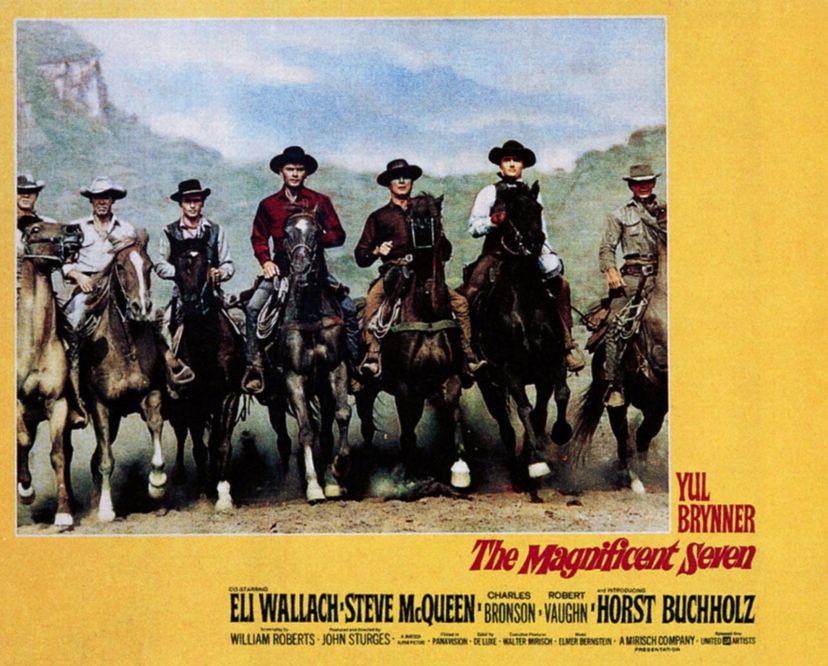
The 1960 film "The Magnificent Seven" was a remake of the Japanese classic "Seven Samurai" and starred (from left): Steve McQueen, James Coburn, Horst Buchholz, Yul Brynner, Brad Dexter, Robert Vaughn and Charles Bronson. LMPC via Getty Images
The samurai were not necessarily as chivalrous and honorable as they were often portrayed in books and films. Although they were brave and skilled warriors, they frequently burned villages and collected the heads of people they had killed. And they were not above defecting during battles either and joining whichever side paid them the most, particularly in earlier centuries. Many of the well-known aspects of samurai culture, like bushido, only came about relatively late in the 17th century. And some of the famous tales about samurai of medieval times were rewritten hundreds of years later to incorporate those values like bushido.
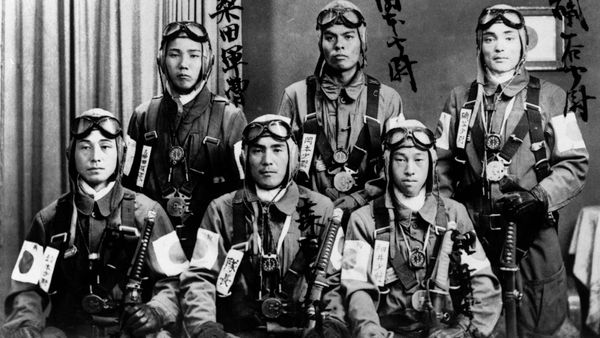
Still the mythology of the samurai has had a huge influence on Japanese and even Western culture, whether it's the kamikaze pilots of Japan in World War II, martial arts or even modern business owners who look to bushido as a guide to living an honorable life. The way of the samurai is also kept alive in anime, computer games, movies and books.
Advertisement
Here are just a few of the many movies that depict the samurai:
"Samurai I: Musashi Miyamoto" (1954)
"Seven Samurai" (1956)
"The Magnificent Seven" (Based on "Seven Samurai") (1960)
"Yojimbo" (1961)
"Harakiri" (1962)
"Sanjuro" (1962)
"Kagemusha" (1980)
"Shogun Assassin" (1980)
"Ran" (1985)
"Ghost Dog: The Way of the Samurai" (1999)
"The Last Samurai" (2003)
"Blade of the Immortal" (2017)
And if you'd like to read more about the samurai, here are some of the best-known books on the subject:
"The Book of Five Rings" by Miyamoto Musashi
"Shogun" by James Clavell
"Lust, Commerce and Corruption" by an Edo Samurai
"The 47 Ronin Story" by John Allyn
"Taiko" by Eiji Yoshikawa
"Bushido: The Soul of Japan. A Classic Essay on Samurai Ethics" by Inazō Nitobe
Advertisement
Samurai FAQ
What does a samurai warrior symbolize?
In Japanese culture, the samurai are an important symbol of respect, discipline and honor.
Who is the most famous samurai in history?
Within Japan, Oda Nobunaga is considered the most famous samurai. He was the head of the very powerful Oda clan and was one of the leading figures of the Sengoku period. He is regarded as the first Great Unifier of Japan.
Do samurai still exist?
No, they no longer exist. While their influence certainly lives on in popular and Japanese culture, they have not existed since 1876, when Emperor Meiji banned samurai from wearing their swords.
What were the elite samurai called?
Elite Samurai were known as Shimin and were the only caste granted the privilege of wearing two swords. They were also allowed to have a first and last name. Shoguns and Daimyo were also members of the Shimin caste.
What does the word samurai mean?
Samurai is derived from the word saburau, which means “to serve.†It also means to look up to someone.
Ancient Origins. "The Honorable Death: Samurai and Seppuku in Feudal Japan" (June 10 2022,). https://www.ancient-origins.net/history-ancient-traditions/honorable-death-samurai-and-suicide-feudal-japan-005822
Fusé, Toyomasa. "Suicide and culture in Japan: A study of seppuku as an institutionalized form of suicide. Social Psychiatry. June 1980. (June 10 2022,) https://link.springer.com/article/10.1007/BF00578069
Carey, Brian Todd. "Japanese Mounted Archery." Warfare History Network. (June 10 2022,) https://warfarehistorynetwork.com/2015/11/11/japanese-mounted-archery/
Encyclopedia Brittanica. "The Fall of the Tokugawa"(June 10 2022,) https://www.britannica.com/place/Japan/The-fall-of-the-Tokugawa
Fruhstuck, Sabine and Anne Walthall. "Child's Play." (June 10 2022,) https://www.luminosoa.org/site/books/10.1525/luminos.40/read/?loc=009.xhtml
History.com. "Tokugawa Period and Meiji Restoration" (June 10 2022,) https://www.history.com/topics/japan/meiji-restoration#section_4
Holland, Oscar and Temujin Doran. "Japan's samurai swordsmiths cling to a centuries-old craft." CNN. Nov. 18, 2019. (June 10 2022,) https://edition.cnn.com/style/article/fusahiro-shimojima-samurai-swordsmith/index.html
KPC International. "Akō vendetta : Revenge of the 47 Ronin." (June 10 2022,) https://www.kcpinternational.com/2015/02/ako-vendetta-revenge-of-the-47-ronin/
National Museums of Scotland. "Samurai Armor" (June 10 2022,) https://www.nms.ac.uk/explore-our-collections/stories/world-cultures/discovering-japan/discovering-japan/samurai-armour/