Friday the 13th is considered to be one of the unluckiest days on the calendar. Stockbyte/Getty Images
Like other superstitions about numbers, the fear of Friday the 13th (paraskevidekatriaphobia) isn't grounded in scientific logic. However, it does have deep, compelling roots. The origins of the Friday the 13th superstition help explain why the belief is so widespread today. So what are some of the most fascinating stories behind this unluckiest of days?
The superstition first appeared in Victorian England. Superstitious people have long considered both the number 13 and the day Friday unlucky, but it was only recently that folklore linked these two ill omens. According to librarian and folklore expert Steve Roud, the first “concrete reference” to “the evil luck of Friday the 13th” in English history comes from 1913 [source: Roud].
Advertisement
Friday the 13th in Biblical Tradition
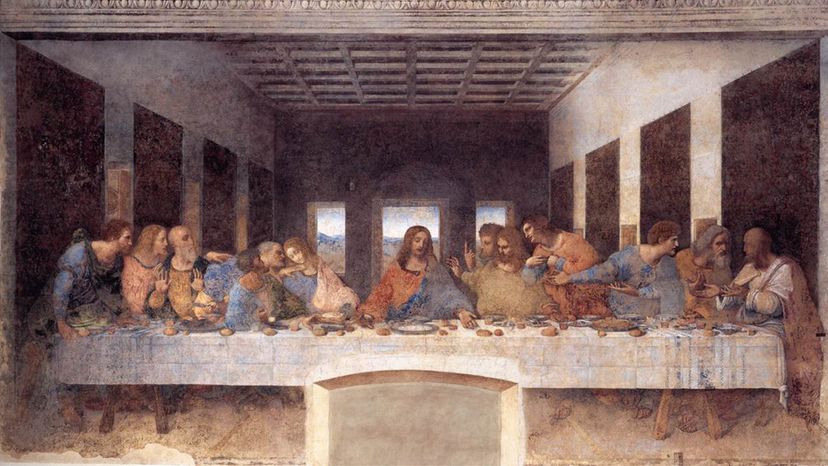
There were 13 people present at the Last Supper. Judas, known for his betrayal of Jesus, was the thirteenth member of the gathering to arrive. Wikimedia Commons
Christians consider 13 unlucky because of the number of people present at the Last Supper (Jesus and his 12 apostles). Judas, the apostle who betrayed Jesus Christ, was the 13th member of the party to arrive.
Christian tradition deemed Friday the worst day of the week because Jesus was crucified on a Friday (observed as Good Friday). Additionally, some theologians hold that Adam and Eve ate from the forbidden fruit on a Friday and that the Great Flood began on a Friday. Some Christians avoid starting a new project or trip on a Friday, fearing it would be doomed from the start.
Advertisement
Sailors were particularly superstitious in this regard, often refusing to begin a journey on a Friday. According to unverified legend (very likely untrue), the British Navy commissioned a ship in the 1800s called H.M.S. Friday to quell the superstition. The navy selected the crew on a Friday, launched the ship on a Friday and even selected a man named James Friday as the ship's captain. Then, one Friday morning, the ship departed on its maiden voyage ... and disappeared forever. A similar, entirely factual story is the harrowing flight of Apollo 13.
Friday the 13th and Paganism
Some historians suggest the Christian distrust of Fridays has roots in the suppression of pagan religions and women in the Middle Ages. In the Roman calendar, Friday was the day of Venus, the goddess of love.
When Norsemen adapted the calendar, they named Venus’s day after Frigg, or Freya, Norse goddesses connected to love and sex. These strong female figures once threatened male-dominated Christianity, so the Church vilified the day named after them.
Advertisement
This characterization may also have played a part in the fear of the number 13. Frigg would often join a coven of witches, usually a group of 12, bringing the total to 13. This idea may have originated with the Christian Church itself; the exact origins are unclear. A similar Christian legend holds that 13 is unholy because it signifies the gathering of 12 witches and the devil.
Friday the 13th and Norse Mythology
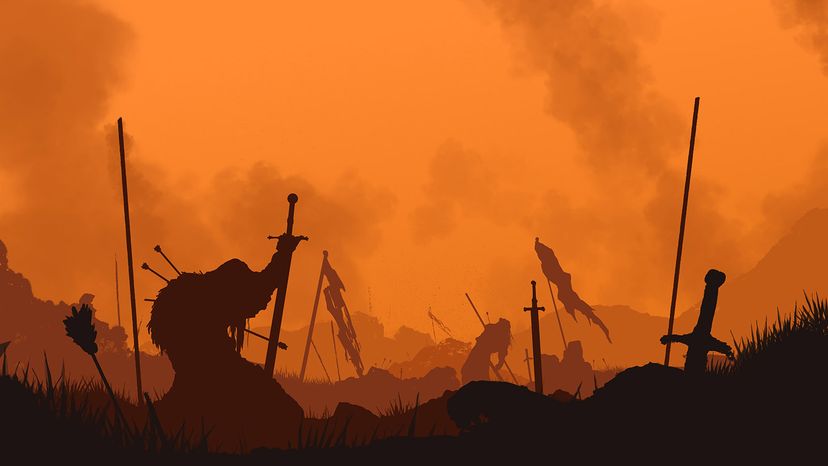
Norse mythology plays a role in the origins of Friday the 13th. iobard/Shutterstock
Some trace the infamy of the number 13 back to ancient Norse culture. In Norse mythology, the mischievous god Loki killed the beloved hero Balder at a banquet. Loki crashed a dinner party of 12, bringing the group total to 13.
This story and the story of the Last Supper led to one of the most entrenched 13-related beliefs: It is bad luck to have a group of 13 at a dinner table.
Advertisement
How Often Does Friday Fall on the 13th?
In the Gregorian calendar (also known as the Christian or Western Calendar), the 13th of the month falls on a Friday an average of 1.72 times a year [source: Weisstein]. For example, in 2009, Friday the 13 happened three times: in February, March, and November. But the next calendar year, 2010, it occurred just once, in August.
Interestingly, the 13th is very slightly more likely to occur on Friday than any other day (there is a 14.33% chance of the 13th falling on a Friday; the chances it will fall on a Thursday or Saturday are 14.25%).
Advertisement
Now That's Paranoid
You may not take drastic safety precautions every Friday the 13th, but are you totally immune to the superstition? Given the choice, would you get married, start a new job or close on a house on Friday the 13th? Most Americans wouldn't, even though they don't put much stock in the irrational fear. Some hotels don't have a room 13, and many buildings lack a 13th floor. Superstition has a way of creeping up on people when they're in a particularly vulnerable state.