
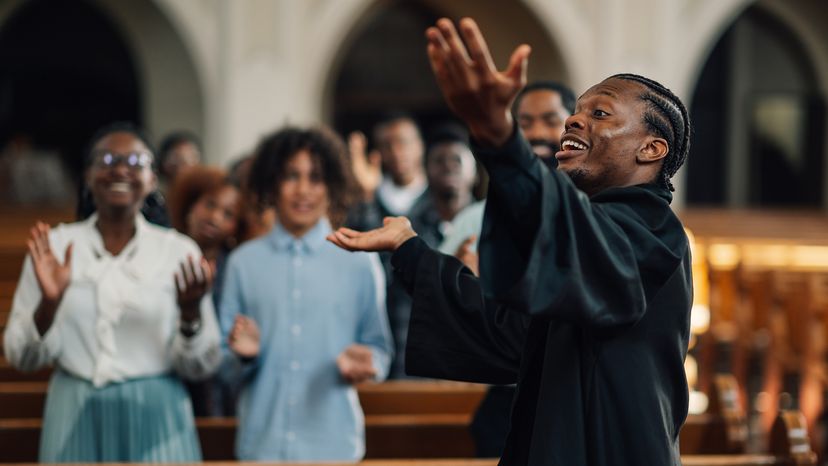
Whether spoken softly in private prayer or shouted in church, the word carries weight. But have you ever asked, why do we say amen?
This small word has a deep history and powerful meaning across many faiths and centuries.
Advertisement
Whether spoken softly in private prayer or shouted in church, the word carries weight. But have you ever asked, why do we say amen?
This small word has a deep history and powerful meaning across many faiths and centuries.
Advertisement
The word "amen" is a Hebrew word that literally means "truth," "certainty," or "so be it." It’s closely tied to faith, conviction, and belief in the scriptures.
Found throughout both the Old and New Testament, it acts as a declaration of affirmation, often concluding prayers, blessings, and public worship.
Advertisement

Saying "amen" is an act of acknowledging truth and expressing agreement with God’s perfect will. It confirms faith in God’s creation, justice, and sovereignty, whether spoken at the end of a prayer or after hearing a powerful message.
Advertisement
In the book of Revelation, Jesus Christ is called the "Amen, the faithful and true witness" (Revelation 3:14), tying the word directly to His role in affirming God’s truth. This passage—"To the church in Laodicea write... the Amen... the faithful and true witness"—underscores the word’s divine power.
Throughout the Bible, the word amen appears in response to God's word. Phrases like “All the people said, Amen” reflect public affirmation of faith. Paul ends many of his letters with amen, reinforcing it as a statement of belief and praise.
Advertisement
In the New Testament, Jesus often began teachings with “verily, verily” (translated from amen), emphasizing the truth and weight of His words before He even spoke them.

Christians, Jews, and Muslims all use amen in prayers and acts of worship. It functions as a bridge between the person and God—a way to respond, declare, and commit to what has just been said. Whether you say "ah-men" or "ay-men," the intent remains the same.
Some have speculated a connection between the word amen and the Egyptian god Amun. While this theory appears in popular culture, most scholars agree that the biblical amen comes from Hebrew, not Egyptian sources.
Advertisement
It's not just about ending a sentence. It is a spoken agreement, a response of the soul, and a confirmation of faith. In church, during praise, or while praying alone, it becomes a moment of alignment between the believer and God.
From Jesus to the apostles like Peter and Paul, amen served as a verbal sign of truth, belief, and spiritual authority. When you say it, you're adding your voice to centuries of faithful witnesses.
Advertisement
So the next time you hear it or say it, remember: It’s not just a word. It’s a witness, a declaration, and a statement of agreement with the truth.
We created this article in conjunction with AI technology, then made sure it was fact-checked and edited by a HowStuffWorks editor.
Advertisement
Please copy/paste the following text to properly cite this HowStuffWorks.com article:
Advertisement