Origins of Hinduism and a Constantly Evolving Religion

By: Lena Thaywick  | 
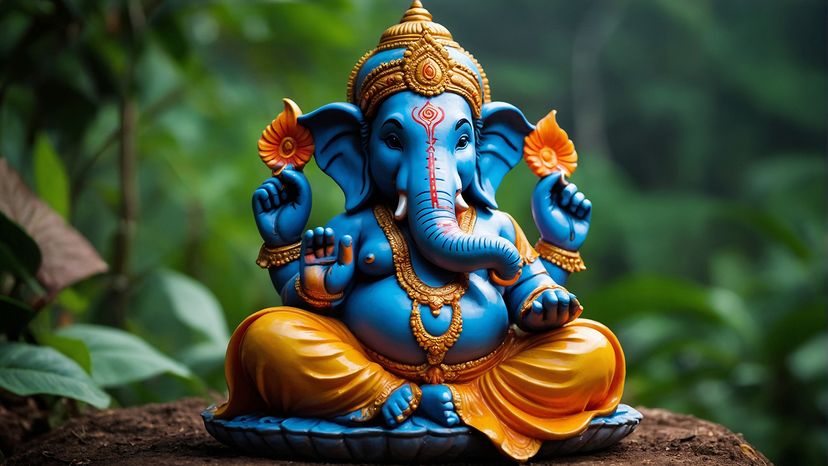
Ganesh is one of the most famous Hindu gods. Priti sinha 12345 / Shutterstock

Hinduism is often called the world’s oldest living religion. But tracing the origins of Hinduism isn’t like finding the founder of Christianity or the date Islam began. It doesn’t have a single historical founder or sacred text.

Instead, Hinduism grew over thousands of years, absorbing and blending ideas across the Indian subcontinent.

Advertisement

That means we have to look at history, language, and cultural traditions to understand where the Hindu religion came from and how it continues to shape the lives of over 1 billion people around the world today.
Early Clues From the Indus Valley

One of the earliest roots of Hinduism lies in the ancient Indus Valley Civilization.

This urban culture thrived around the Indus River in present-day Pakistan more than 4,000 years ago. Archaeologists have found terracotta figurines, possibly linked to fertility goddesses, and signs of ritual bathing, which hint at early religious practices.

Advertisement

But the Indus Valley people left no readable written texts. We can’t say for sure what they believed or worshipped. Still, some scholars think their symbols and traditions may have influenced the Indian religion that followed.

The Vedic Period and Sanskrit Writings

Around 1500 B.C.E., a group called the Indo-Aryans entered the region, bringing the Sanskrit language and a new set of beliefs. This started what we now call the Vedic period. Their sacred texts, known as the Vedas, are among the earliest written records of Indian religion.

The Rig Veda, the oldest of these texts, contains hymns to Vedic gods like Indra, Agni, and Varuna. These deities represented forces of nature, and worship focused on fire rituals and offerings. This was not yet Hinduism, but it laid the foundation for many Hindu beliefs and practices.

Advertisement

From Vedic Ritual to Personal Gods

shiva
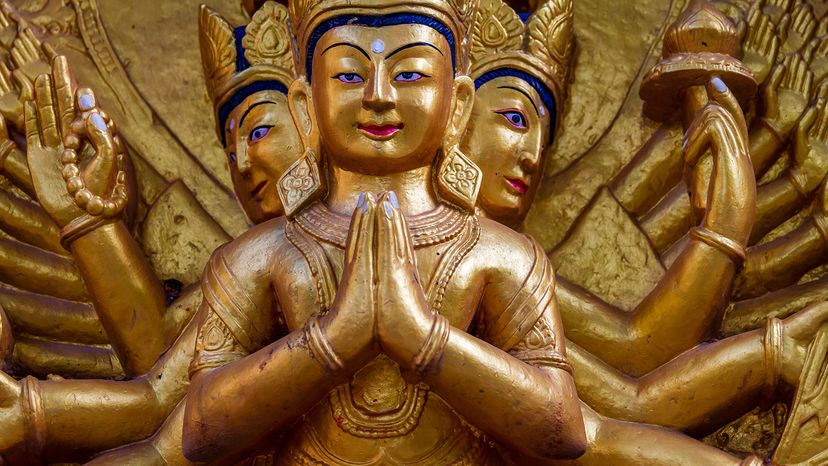
This statue of Shiva sits in Nepal, showing the far reach of Hinduism. Nabaraj Regmi / Shutterstock

Over the centuries, Vedic religion shifted from ritual sacrifice toward more personal devotion. The idea of a personal god—a deity you could love, pray to, and form a relationship with—grew stronger. Gods like Vishnu and Shiva rose in popularity, as did goddesses like Devi and Lakshmi.

Temple worship became a central part of religious life. Unlike the earlier fire rituals, temple practices involved images, songs, and acts of devotion. The idea of dharma (living in line with cosmic order) also became central to the Hindu worldview.

Advertisement

The Term 'Hindu' and Sanatana Dharma

The word "Hindu" comes from a Sanskrit word for the Indus River, used by Persians to describe the people living east of it. Over time, it became a way to distinguish non-Muslims (Hindus) from Muslims when Islam spread into South Asia.

But many Indian people prefer the term "Sanatana Dharma," which means "eternal truth" or "eternal duty." This reflects the idea that Hinduism isn’t just a religion, but a way of life with eternal principles that guide human existence.

Advertisement

Blending Beliefs Over Time

The history of Hinduism includes influences from many cultures. When Muslims invaded India starting in the 8th century, they brought new ideas and tensions. Yet, Hinduism adapted, sometimes (but not always) blending with Islamic ideas.

Later, British colonialism and contact with Christianity also challenged Hindu traditions. In response, reform movements emphasized sacred texts and ethical living. Hindu scholars, like Swami Vivekananda, reintroduced Hindu philosophy to the world stage.

Advertisement

Why Hinduism Is Hard to Define

Unlike Christianity or Islam, Hinduism has no single founder, no central scripture like the Bible or Quran, and no unified doctrine. Its sacred texts include the Vedas, the Upanishads, the Bhagavad Gita, and more. It’s a blend of myths, rituals, philosophies, and daily practices.

Rather than looking for a singular definition, it’s better to think of Hinduism as a family of related traditions than a single belief system.

Advertisement

A Living Tradition

women
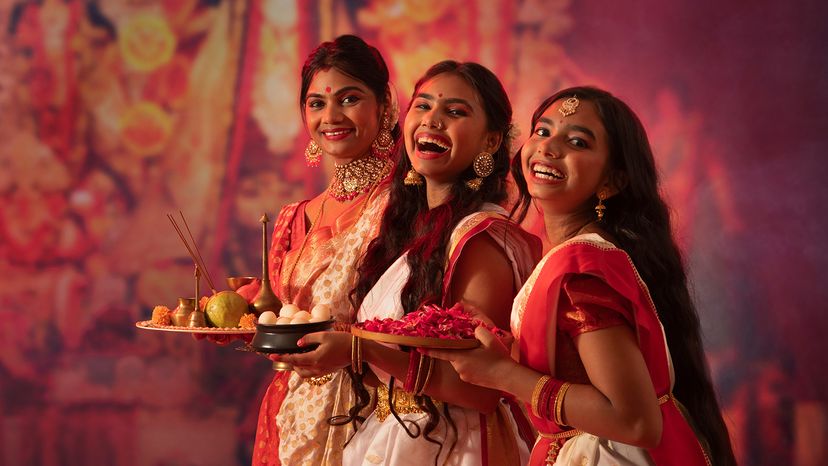
Not every family honors Hinduism in the same way, and that's beautiful. India Picture / Shutterstock

Hinduism continues to evolve. Its practices differ across regions, families, and even individuals. It encompasses devotion, philosophy, yoga, temple rituals, festivals, and moral codes. It influences everything from art and literature to food and social norms in India and beyond.

Its roots are ancient, but its branches keep growing, adapting to the needs of each generation. That’s why the origins of hinduism are not just a matter of history: They’re a story of how humans have searched for meaning on this earth across centuries.

Advertisement

We created this article in conjunction with AI technology, then made sure it was fact-checked and edited by a HowStuffWorks editor.

Advertisement

Loading...