The Origins of Buddhism: A Very Brief History

By: Lena Thaywick  | 
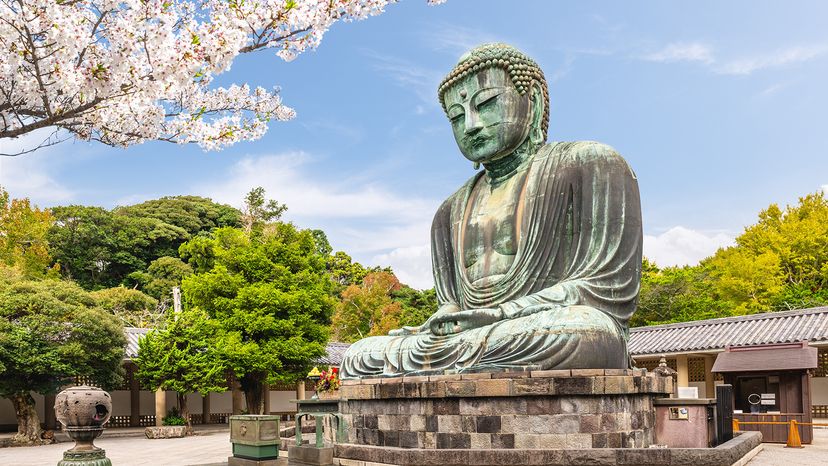
The story of Buddha's life (before he was Buddha) has spawned entire religions and philosophies. Richie Chan / Shutterstock

The origins of Buddhism trace back over 2,500 years to ancient India, where a spiritual teacher named Siddhartha Gautama achieved enlightenment and became the Buddha.

His teachings, known as the Dharma, would grow into one of the world’s major philosophies, shaping the spiritual and philosophical landscape of Asia and beyond.

Advertisement

The Life of the Buddha

Born in the 6th century B.C.E. in what is now Nepal, Siddhartha Gautama was a prince shielded from the suffering of the world. Upon encountering illness, old age, and death, he abandoned his royal life in pursuit of spiritual awakening.

After years of ascetic practices, he meditated beneath the Bodhi tree and attained enlightenment.

Advertisement

He began teaching as the historical Buddha, offering insights into the human condition and the path to liberation from human suffering. His followers, including Buddhist monks and Buddhist monastics, would later formalize his teachings into schools of thought.

The Core of Buddha’s Teachings

At the heart of Buddha’s teachings are the Four Noble Truths:

  • Life involves suffering.
  • Suffering is caused by craving (desire and attachment).
  • Suffering can be overcome.
  • The path to the end of suffering is the Noble Eightfold Path.

The Noble Eightfold Path includes practices like right intention, right speech, and right mindfulness, which guide followers toward ethical living and spiritual growth.

Advertisement

These foundational concepts became central to early Buddhism and continue to influence Buddhist practice today.

Advertisement

Early Development and Spread

After the Buddha’s death, his teachings were preserved orally and later written in texts like the Pali Canon. The First Buddhist Council convened to compile and preserve the Buddhist doctrine, with later councils refining the canon and addressing divisions in the community.

Buddhism quickly spread across the Indian subcontinent and into Central Asia, Southeast Asia, and eventually East Asia. Buddhist monasteries and Buddhist temples became centers of learning and devotion.

Advertisement

Branches and Buddhist Schools

Over time, Buddhism developed into several Buddhist traditions or schools, each interpreting the Dharma in different ways:

  • Theravada Buddhism, the oldest form, emphasizes the original teachings and is dominant in Sri Lanka and many Southeast Asian countries.
  • Mahayana Buddhism, popular in China, Korea, and Japan, introduces concepts like Buddha nature and the role of bodhisattvas.
  • Tibetan Buddhism, a form of tantric Buddhism, combines monastic discipline with esoteric rituals and is practiced mainly in Tibet and the Himalayan region.
  • Chan Buddhism, which later evolved into Zen, focuses on meditation and direct insight.

Each school contributes to the richness of Buddhist belief and reflects local cultures and histories.

Advertisement

Buddhism in the Modern World

Though Buddhism faced challenges from other religions and political forces like the Chinese Communists, it remains a dominant religion in many regions and continues to attract followers globally.

Modern scholars and practitioners explore Buddhist thought for its relevance to mental health, ethics, and inner peace. Buddha images, Buddhist texts, and rituals remain symbols of faith, while Western interest in Buddhist teachings has led to new interpretations and practices.

Advertisement

Today, Buddhism stands as a tradition rooted in compassion, wisdom, and the pursuit of the ultimate spiritual goal: freedom from suffering and realization of ultimate reality.

We created this article in conjunction with AI technology, then made sure it was fact-checked and edited by a HowStuffWorks editor.

Advertisement

Advertisement

Loading...