The Oldest Religions in the World Predate Written Records

By: Lena Thaywick  | 
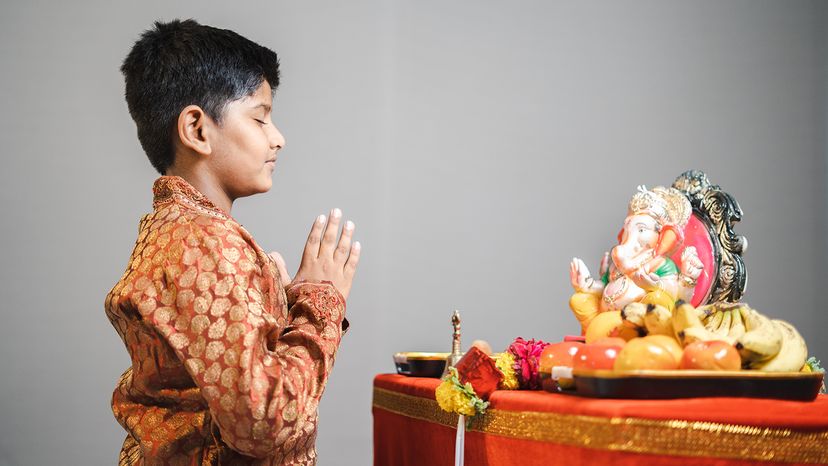
Hinduism is the oldest religion that's still widely practiced. WESTOCK PRODUCTIONS / Shutterstock

In any list of the oldest religions in the world, one thing becomes clear fast: Religion began long before written records.

The bulk of the human religious experience predates recorded history, so tracing the exact start of any faith is tricky. Some belief systems grew slowly out of rituals, stories, and spiritual beliefs that took shape over centuries.

Advertisement

That makes this topic bigger than a timeline. The world's oldest religion traditions still shape the modern world, from laws and moral codes to community life and ideas about human life, suffering, salvation, and what happens after death.

Studying them helps us see which ideas people let go of, which ones stayed, and why religion still matters so much to human experience.

Advertisement

1. Hinduism

Many scholars widely consider Hinduism the world's oldest religion still practiced today, which is why it often leads any discussion of the oldest religion or the world's oldest religion.

Rather than starting with one founder or one sacred text, Hinduism developed across the Indian subcontinent over a very long stretch of time, with roots dating to Vedic traditions and perhaps even the Indus River Valley in the ancient world.

Advertisement

Its religious texts are multiple works collectively called the Vedas, and the Rig Veda is usually treated as Hinduism's oldest scripture. Hindu religious practices vary enormously, but ideas such as karma, ritual, worship, and duty link many traditions together.

Hinduism also remains one of the biggest world religions in the world. The Pew Research Center estimated about 1.2 billion Hindus worldwide in 2020, which makes it the third-largest religion after Christianity and Islam.

For a tradition with no single founder, that reach says a lot about how durable beliefs and practices can be.

Advertisement

2. Ancient Egyptian Religion

Ancient Egyptian religion no longer functions as a major living faith, but it deserves a place on this list because its ideas left deep marks on later religions.

Egyptian rituals centered on gods, sacred kingship, temple worship, and a detailed vision of the afterlife, where judgment mattered and moral conduct in this world could affect the next.

Advertisement

That focus on judgment and the afterlife was a prominent feature of ancient Egyptian religion. When people in the modern world talk about morality, reward, punishment, and the fate of the soul, they are often using frameworks that took early form in religions like this one.

In that sense, ancient religion is not dead history. It still echoes through modern moral imagination.

Advertisement

3. Judaism

Judaism traces its roots to the covenant between God and Abraham. Britannica's overview of Judaism describes it as a monotheistic religion centered on the worship of one God, and that belief in only one God became one of the defining features of the Abrahamic religions.

Its sacred text is the Torah, which also forms part of the Tanakh, the Hebrew Bible and, later, the Christian Old Testament.

Advertisement

The religion of the Jewish people took shape in the ancient Near East, or Middle East, and continued through major turning points such as the era of the Second Temple. Modern Judaism still carries those older layers of memory, law, and ritual.

Judaism has had an influence far beyond its numbers. Its ethical philosophy, its laws, and its vision of covenant helped frame later Christian doctrine and Islamic thought, especially on questions of morality, justice and divine law.

Many of the ethical codes found in later religions build on ideas first preserved in early Jewish religious texts, including the Ten Commandments.

Advertisement

4. Zoroastrianism

Zoroastrianism was founded by the prophet Zoroaster in ancient Persia and is often described as one of the world's first monotheistic religions. It is one of the world's oldest surviving religions, centered on Ahura Mazda as the supreme god and containing both monotheistic and dualistic elements, and on the moral choice between truth and falsehood.

Its importance is bigger than its present size. Zoroastrian ideas about judgment, heaven, hell and the cosmic struggle between good and evil have been proposed as possible influences on other religions that developed in the Middle East.

Advertisement

That makes it a key bridge between the ancient world and later belief systems, especially in the way modern people imagine salvation, punishment, and the meaning of moral action.

5. Jainism

Jainism emerged in the same spiritual climate as Buddhism in India, with roots in the sixth century B.C.E. It is one of the clearest examples of a religion built on strict adherence to ethical discipline.

The core of Jain practice is ahimsa, or nonviolence, joined by non-possessiveness and asceticism, as Britannica explains.

Advertisement

That sounds austere, but Jainism is really asking a direct question: How lightly can a person move through the world without causing harm? Its teachings turned ethics into everyday practice, shaping diet, ritual and behavior.

Among the oldest organized religions, it stands out for making moral restraint the center of faith.

Advertisement

6. Buddhism

Buddhism began when Siddhartha Gautama reached enlightenment in what is now modern day India, then became known as the Buddha. From there, Buddha's teachings spread across Asia, eventually becoming one of the major world religions.

The heart of Buddhism is the Four Noble Truths, which explain suffering, its cause ,and the path to its end. Britannica's entry on the Four Noble Truths describes them as fundamental to the religion.

Advertisement

Buddhism's teachings also address rebirth, the cycle of existence and the possibility of release from suffering, which gives the tradition both a practical and deeply philosophical character.

Buddhism matters in this list because it shows how a religion in the world can spread without relying on one creator god. Commercial exchange, migration, and cultural contact helped move Buddhist traditions far beyond the Indian subcontinent. As those networks widened, religions became global.

Advertisement

7. Confucianism

Confucianism is a special case because it is often described as a social and ethical philosophy as much as a religion. Britannica calls it a worldview, a social ethic, a political ideology, and a way of life.

That's why some scholars classify it with world religions while others place it closer to ethical philosophy.

Advertisement

Its teachings are collected in the Analects and focus on proper conduct, social harmony, learning, and moral self-cultivation. In practice, Confucianism has shaped family structure, education, and public life across East Asia for centuries.

Even when it was treated as an official religion or state doctrine at one point in Chinese history, it never looked quite like other organized religions built around a church, priesthood, or a single sacred story of salvation.

Advertisement

8. Taoism

Taoism (sometimes spelled "Daoism") is linked to the teachings of Laozi and to the Tao Te Ching. It arose in China around the 6th century B.C.E. and became one of the great traditions of East Asia. Britannica's overview of Taoism describes it as a philosophy, a religion, and a way of life all at once.

Where Confucianism often emphasizes social order, Taoism asks people to live in harmony with the Tao, or the way.

Advertisement

That does not mean passivity. It means paying attention to balance, rhythm and the shape of the natural world.

The result is a tradition that has influenced worship, meditation, medicine, and spiritual practice for more than two millennia.

Advertisement

9. Shinto

Shinto, or kami-no-michi, is the Indigenous spirituality of Japan. Rather than centering on one founder or one official scripture, it grows out of rituals, local shrines, and reverence for kami, often understood as sacred presences connected to nature, ancestors and place.

That makes Shinto a useful reminder that religion is not always about creeds. Sometimes it lives in ceremonies, seasonal festivals, and the quiet habits of a community.

Advertisement

At one point, Shinto was also closely tied to the Japanese state. In the modern world it still shapes identity and public ritual in many countries' understanding of Japan.

10. Christianity

Christianity emerged in the Roman Empire during the fist century C.E., growing from Jewish roots around the teachings of Jesus Christ. Over time it developed into the largest religion in the world, with branches including Roman Catholicism, Eastern Orthodoxy and Protestantism.

Britannica and Pew both show how widely Christianity now spans many countries, from Eastern Europe to North Africa, East Africa, and the Americas.

Its sacred text is the Bible, divided into the Old Testament and the New Testament. Christianity built on Jewish scripture while adding new teachings about Jesus, redemption and salvation, so it preserved older religious texts even as it reshaped them.

That blend of continuity and change helps explain why Christianity became such a powerful force in law, culture and human identity.

11. Islam

Islam began in the seventh century C.E. in the Middle East and follows the teachings of the Prophet Muhammad.

It is a monotheistic religion centered on one God, and Muslims regard the Qur'an as the word of God revealed to Muhammad. Britannica's Islam overview notes that Islam also places Muhammad within a longer line of prophets that includes figures known to Jews and Christians.

Islam is younger than the other religions above, but it belongs in this list because it became one of the most influential faiths in history with remarkable speed. Trade, scholarship, and empire expansion helped carry it across North Africa, East Africa, South Asia, and Southeast Asia.

Compared with new religions or the youngest religion movements of the modern era, Islam is both historically recent and undeniably ancient in its civilizational reach.

Which Ancient Religions Aren't Considered the Oldest?

Not every old tradition became a global religion, and not every ancient faith survived as a large living community. Ancient Greek religion, for example, shaped philosophy, myth, and literature, but it is no longer one of the main organized religions of the world.

Even so, old rituals still inspire modern practices, from New Age spirituality to forms of modern Paganism, showing that the line between old religion and new religions is often thinner than it looks.

Understanding these traditions helps explain more than worship. It explains why sacred text can organize a society, why moral rules can outlast empires, and why faith has remained one of the most durable parts of human life from prehistory to the middle ages to the present.

We created this article in conjunction with AI technology, then made sure it was fact-checked and edited by a HowStuffWorks editor.

Advertisement

Loading...