

Ever wonder where the jolly man in the red suit came from? The origins of Santa Claus are a mix of myth, history, and marketing, all rooted in an ancient saint and reshaped by centuries of Christmas customs and commercial imagination.
Advertisement
Ever wonder where the jolly man in the red suit came from? The origins of Santa Claus are a mix of myth, history, and marketing, all rooted in an ancient saint and reshaped by centuries of Christmas customs and commercial imagination.
Advertisement
Santa Claus starts with Saint Nicholas, a fourth-century Christian bishop from what is now modern-day Turkey.
Known as the patron saint of children and sailors, he became famous for secretly giving gifts to the poor. Tales of him tossing coins through windows or placing them in shoes laid the foundation for the gift-giving side of the Christmas tradition.
Advertisement
Nicholas's feast day, December 6, was celebrated widely in European countries. As Christianity spread, so did the saint's reputation, eventually influencing other regional gift-bringers, such as Germany’s Christkind (later Anglicized as "Kris Kringle") and England’s Father Christmas.
Dutch settlers in the U.S., especially in the New York area, brought with them the tradition of "Sancte Claus." This name eventually evolved into Santa Claus in English-speaking communities.
In 1809, Washington Irving included a version of the saint in his satirical work, which helped cement the image of Santa in American culture.
Advertisement
In 1810, John Pintard of the New York Historical Society organized a Nicholas anniversary dinner and commissioned artist Alexander Anderson to create the first American image of Saint Nicholas. This early Santa looked more like a traditional bishop than the red-suited figure we know today.

The poem "A Visit from St. Nicholas," better known as "'Twas the Night Before Christmas," was published anonymously in 1823 and later attributed to Clement Clarke Moore.
This poem introduced many now-familiar elements: a sleigh with flying reindeer, a Santa who comes on Christmas Eve, and a "right jolly old elf" with a "little round belly."
Advertisement
It was here that Santa took on a more playful, magical tone, bringing gifts to good children and slipping away before being seen. The poem became a core part of Christmas celebrations in the 19th century.
Political cartoonist Thomas Nast, working for Harper’s Weekly during the Civil War, helped standardize Santa's look.
He drew Santa as a bearded man with a round belly, dressed in a fur-trimmed red suit, and living at the North Pole. Nast also introduced the idea of Santa’s workshop and naughty-or-nice list.
Advertisement
His illustrations turned Santa into a fixture of American Christmas culture and helped create the template for the modern Christmas holiday icon.
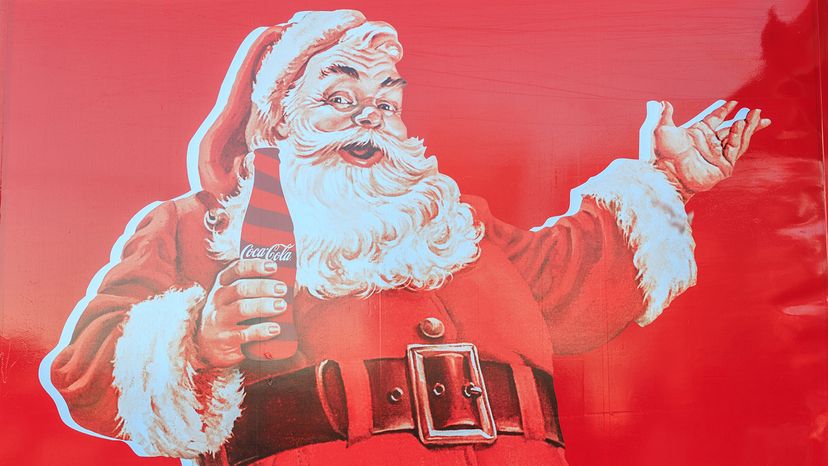
In the 1930s, the Coca-Cola Company commissioned artist Haddon Sundblom to create advertisements featuring Santa. His version showed Santa in a bright-red suit with white fur trim, a jovial face, and a twinkle in his eye.
This imagery, reinforced by decades of holiday marketing, helped lock in the modern version of Santa known worldwide today.
Advertisement
While Coca-Cola didn’t invent Santa’s red suit, the brand made it nearly impossible to imagine him in anything else.
Today, Santa Claus appears in shopping malls, holiday parades, and Christmas movies. He's become both a symbol of Christmas cheer and a central figure in family life during the festive season.
From singing carols to leaving out cookies and milk, Santa remains the link between centuries-old traditions and modern Christmas celebrations.
Advertisement
Whether you know him as Kris Kringle, Father Christmas or simply Santa, this character continues to evolve while keeping the spirit of giving alive each holiday season.
We created this article in conjunction with AI technology, then made sure it was fact-checked and edited by a HowStuffWorks editor.
Advertisement
Please copy/paste the following text to properly cite this HowStuffWorks.com article:
Advertisement