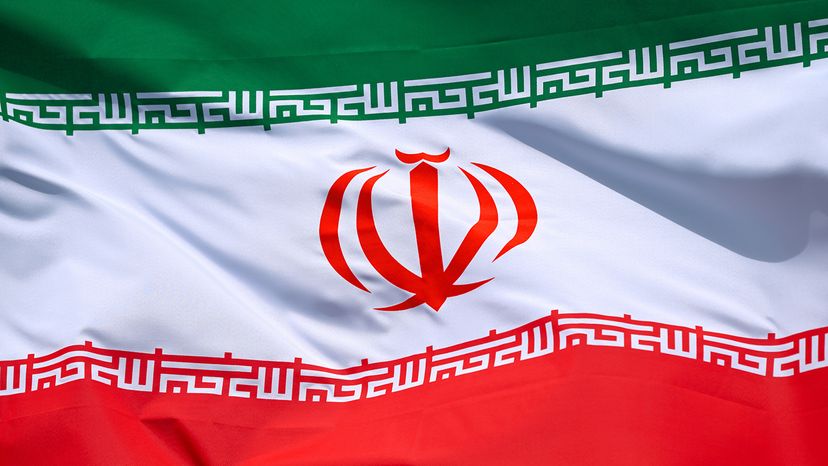
What Language Does Iran Speak? About Farsi, Persian, and Regional Dialects

By: Lena Thaywick  | 
Do Iranians speak Arabic? Not as the official language. You'll find Persian spoken by the majority of the population. Andreas von Mallinckrodt / Shutterstock

What language does Iran speak? There's a simple answer on the surface but a more complex reality underneath.

Iran's official language is Persian, commonly called Farsi, and it is spoken by the vast majority of the population. At the same time, Iran is home to dozens of other languages that reflect the country's long history and ethnic diversity.

Advertisement

Modern Iran contains many linguistic communities shaped by geography, migration, and empire. Understanding how Persian developed and how other languages fit into the country's linguistic landscape helps explain how communication works across the Islamic Republic today.

Persian: The Official Language of Iran

Persian, known locally as Farsi, is the official language of Iran and the primary language used in government, education and media. The Iranian Constitution requires Persian for official documents, correspondence and texts, as well as text-books.

Roughly 53 percent of the population speaks Persian, while many others use it as a second language. In practice it serves as the lingua franca that allows people from different ethnic groups to communicate across the country.

Advertisement

Persian belongs to the Iranian branch of the Indo-Iranian subgroup of the Indo-European language family. That means it is linguistically related to languages such as English, French, and Hindi rather than to Arabic.

Contemporary Persian—sometimes called Standard Persian or Iranian Persian—is written in a modified form of the Arabic script known as the Perso-Arabic alphabet. The dialect spoken in Tehran generally serves as the model for formal language use across the country.

Advertisement

A Language With Ancient Roots

The Persian language developed through several historical stages. Linguists usually divide its history into Old Persian, Middle Persian, and New Persian.

Old Persian appears in cuneiform inscriptions from the Achaemenid Empire. Middle Persian, often called Pahlavi, became the language of administration and religion during the Sasanian Empire.

Advertisement

Modern Persian evolved from Middle Persian after the Islamic conquest of Persia in the seventh century. During the early Middle Ages, Persian literature flourished and became a major literary language across the Middle East, Central Asia, and the Indian subcontinent.

Famous poets such as Ferdowsi, Rumi and Hafez helped establish Persian as one of the great literary languages of the world.

Advertisement

Why Persian Contains Many Arabic Words

Although Persian and Arabic belong to completely different language families, Persian contains a large number of Arabic loanwords. This influence developed after the Islamic conquest when Arabic became the language of religion and scholarship.

Classical Arabic remains important for religious purposes because it is the language of the Quran. As a result, many Iranians learn some Arabic for religious study even though only a small percentage speak Arabic as their native language.

Advertisement

Arabic is spoken by minority communities mainly in southwestern Iran and along the Persian Gulf, particularly in Khuzestan Province.

Other Languages Spoken in Iran

Iran is one of the most linguistically diverse countries in the Middle East. Researchers estimate that about 79 living languages exist in the country, including more than 65 Indigenous tongues.

Many of these languages belong to the Iranian language group related to Persian. Kurdish, spoken by millions of people in western Iran, is one of the largest minority languages.

Advertisement

Azerbaijani Turkish is another major language and the largest Turkic language in the country. It is spoken by roughly 13 to 16 percent of the population, mainly in the Iranian Azerbaijan region.

Other regional languages include Luri and Laki in western Iran, Balochi in the southeastern province of Sistan and Baluchestan and Caspian languages such as Gilaki and Mazandarani along the northern coast.

Iran also has smaller communities speaking Armenian, Assyrian, Hebrew, Georgian, and Circassian.

Advertisement

Language and Identity in Modern Iran

Because Iran contains many ethnic groups and linguistic traditions, language plays an important role in cultural identity. Regional languages carry local folklore, music, and storytelling traditions that remain important to many communities.

At the same time, the government promotes Persian as a unifying national language. Schools teach in Persian while minority languages may appear in local media or in courses focused on minority language literature.

Advertisement

This balance allows Persian to function as the shared national language while Iran's many regional languages continue to reflect the country's diverse cultural heritage.

We created this article in conjunction with AI technology, then made sure it was fact-checked and edited by a HowStuffWorks editor.

Advertisement

Advertisement

Loading...