10 Portuguese Speaking Countries and Regions Spanning 4 Continents

By: Lena Thaywick  | 
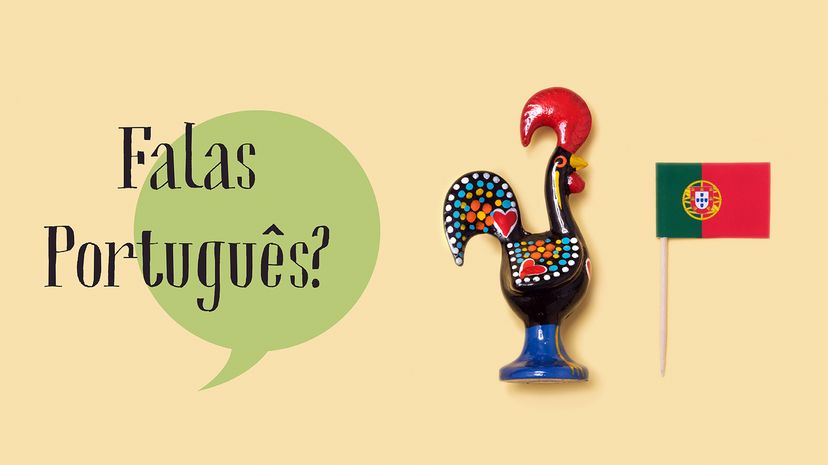
You don't need to be fluent to guess that this translates to "Do you speak Portuguese?" nito / Shutterstock

Portuguese-speaking countries form a global network connected by a shared language, history, and culture. Portuguese is a widely spoken language across South America, Europe, Africa, and parts of Asia, making it one of the most spoken languages in the world.

Today, people speak Portuguese as a native language, second language, or lingua franca in several countries.

Advertisement

The Portuguese language spread through exploration, trade, and colonization, especially across the Atlantic Ocean. While accents and vocabulary vary, Portuguese remains an international language used in government, education, and foreign affairs.

Portugal: The European Origin

Portugal is the only country in Europe where Portuguese is the main official language. Located on the Iberian Peninsula, it is home to dialects that differ from those spoken elsewhere. Northern Portugal preserves older pronunciation patterns, while urban areas reflect modern linguistic change.

Portuguese developed from Vulgar Latin, evolving alongside Spanish and French. From this small European nation, the language spread worldwide.

Advertisement

Brazil: The Largest Portuguese-Speaking Nation

Brazil is the only South American nation where Portuguese is the official language. The nation has the largest number of Portuguese speakers, making Brazilian Portuguese the most widely spoken variety of Portuguese.

Brazilian dialects vary by region, with differences in rhythm, pronunciation, and vocabulary.

Advertisement

Brazil’s population size makes Portuguese the second-most spoken language in Latin America (after Spanish). Cities like Rio de Janeiro help shape global perceptions of the language.

6 Portuguese-Speaking Countries in Africa

Six African countries use Portuguese as an official language: Angola, Mozambique, Guinea-Bissau, Cape Verde, São Tomé and Príncipe, and Equatorial Guinea, where it serves as a third official language. These Portuguese-speaking African countries are also referred to as Lusophone countries.

In these regions, Portuguese coexists with local African languages and Portuguese-based creole languages. Angolan Portuguese and other regional varieties reflect local culture, Indigenous languages, and colonial history.

Advertisement

2 Portuguese-Speaking Regions in Asia

Portuguese also appears in parts of Asia.

Macau, a special administrative region of China, recognizes Portuguese as an official language alongside Chinese. In Timor-Leste, Portuguese returned as an official language after Indonesian rule.

Advertisement

These areas highlight how Portuguese remains part of cultural identity even where it is not the most commonly spoken language.

The Portuguese-Speaking World Today

Portuguese remains important in international organizations and education systems.

For learners, Portuguese offers access to diverse cultures, literature, and history. From Europe to the African continent to South America, hearing Portuguese means stepping into a truly global language.

Advertisement

We created this article in conjunction with AI technology, then made sure it was fact-checked and edited by a HowStuffWorks editor.

Advertisement

Loading...