Parliamentary Democracy, Explained Simply

By: Lena Thaywick  | 
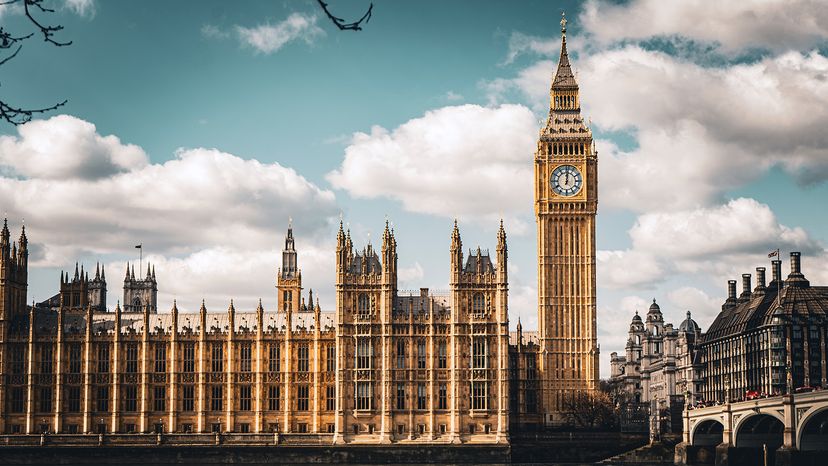
The Houses of Parliament (left) is an iconic structure, but what operates within? Samuel Hagger / Shutterstock

Parliamentary democracy powers many countries across the globe, shaping how citizens choose leaders and how laws get made.

In a parliamentary system, voters elect representatives to a legislative body, and the party (or coalition) with the greatest representation typically forms the government, with its leader serving as prime minister. It is one of the most common forms of modern democracy in most countries today.

Advertisement

How a Parliamentary System Works

In such a system, citizens vote in a general election using a defined electoral system, often based on proportional representation or geographic districts.

The secret ballot protects each vote, and the electoral process determines which political parties gain seats in the lower house (and sometimes the upper house) of parliament.

Advertisement

The majority party—or a coalition of parties forming a majority—selects a leader to serve as prime minister. That leader heads the executive branch and is usually drawn from the legislature.

Because the executive grows out of the legislative branch, most parliamentary systems require the government to maintain the confidence of the majority.

If the ruling party loses that confidence, parliament can remove the prime minister through a vote of no confidence. This mechanism keeps the executive accountable in real time rather than waiting for the next election cycle.

Advertisement

Head of State vs. Head of Government

A key distinction in parliamentary democracies involves the head of state and the head of government.

In many constitutional monarchies—such as United Kingdom and the Benelux countries—a constitutional monarch serves as head of state while the prime minister acts as head of government. The monarch performs ceremonial duties, while elected representatives exercise real political power.

Advertisement

Other countries use a ceremonial president instead of a constitutional monarch. In these parliamentary governments, the president may be indirectly elected by parliament rather than directly elected by citizens.

Parliamentary System vs. Presidential System

By contrast, a presidential democracy separates powers more sharply. In a presidential system like that of the United States, the president leads the executive and does not sit in the legislature.

The president is also elected separately from the legislature, whereas a parliamentary government fuses the executive branch and legislative branch into a single working engine.

Advertisement

That structural split defines the core difference between parliamentary and presidential systems.

Parliamentary Sovereignty and the Constitution

In the United Kingdom, parliamentary sovereignty is a principle of the constitution, meaning Parliament is the supreme legal authority. In some systems, no constitutional court can strike down legislation passed by the legislature. In others, courts review laws to ensure they align with the constitution.

This balance evolved over centuries. In England, parliamentary sovereignty developed gradually and was articulated in the 19th century. After the world wars, many countries revised their constitutions to strengthen democratic governance and clarify the legislative function of parliament.

Advertisement

Scholars in political studies often compare these developments across other countries to explain why few countries follow identical models.

Variations: Semi-Presidential and Mixed Systems

Not all democracies fit neatly into one box. Semi-presidential systems combine elements of parliamentary government and presidential system structures.

In these mixed systems, a directly elected president shares executive power with a prime minister who depends on parliamentary confidence.

Advertisement

France offers one of the clearest examples. The President of the Republic accredits ambassadors and is Commander-in-Chief of the Armed Forces, while the Prime Minister directs the actions of the Government and is responsible for national defense.

Today, many countries use parliamentary or semi-presidential systems. Political parties play a central role, organizing members and structuring the legislative agenda.

Whether in constitutional monarchies, republics with a ceremonial president, or hybrid models, the core goal remains the same: to create a democratic system in which elected leaders remain accountable to the people through regular elections and transparent lawmaking.

We created this article in conjunction with AI technology, then made sure it was fact-checked and edited by a HowStuffWorks editor.

Advertisement

Advertisement

Loading...