Mexico's Flag Represents Ancient History and Everlasting Hope

By: Lena Thaywick  | 
flag of Mexico
Viva México! Sokor Space / Shutterstock

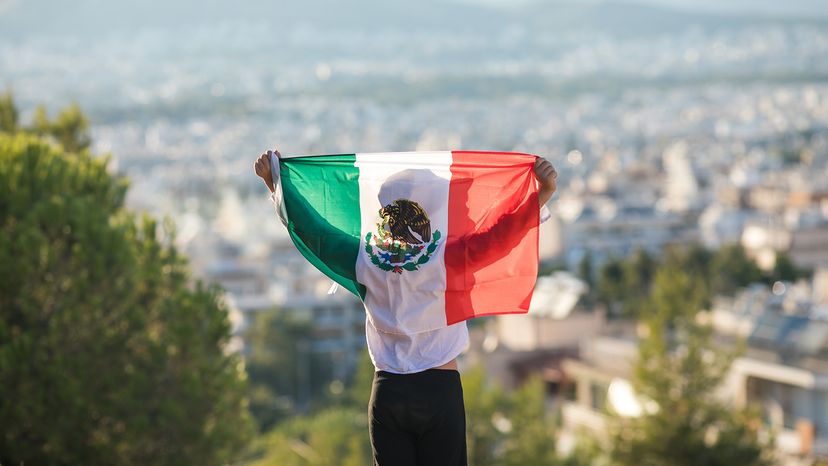
Mexico’s national flag is more than a colorful symbol; it’s a story in fabric form. Mexico's flag—specifically the version we see today—is the result of centuries of conflict, culture, and unification. It’s flown proudly in Mexico City’s central plaza and on government buildings across the country.

The flag features three vertical stripes—green, white, and red—with the national coat of arms in the center. That central emblem, the Mexican eagle perched on a cactus with a snake in its beak, ties directly to an ancient Aztec legend.

Advertisement
Origin and Aztec Legend

According to the legend, the Aztecs were instructed by their gods to settle where they saw an eagle eating a snake atop a cactus on a small island. That sign led them to establish the great city of Tenochtitlán, which later became Mexico City.

The scene is captured in the coat of arms at the heart of the flag.

Advertisement

The Mexican golden eagle has come to represent honor, homeland, and the Mexican people. The cactus, island, and snake each carry symbolic weight, blending ancient mythology with modern nationhood.

Colors and Symbolism

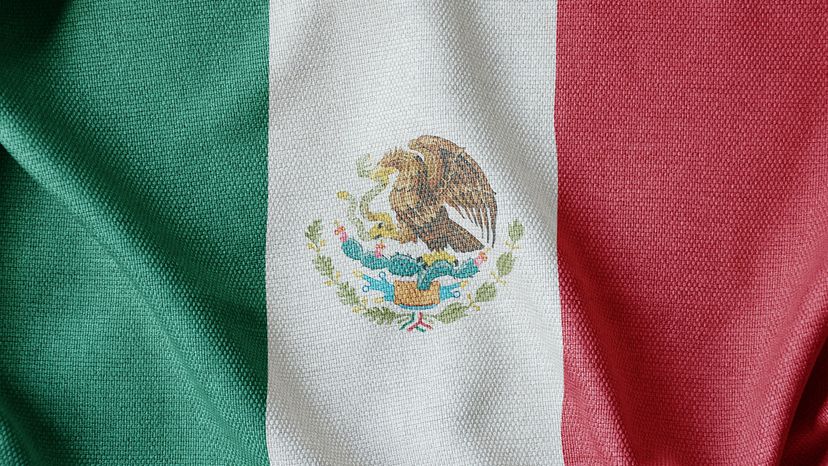
Mexico flag
The crest in the middle of the flag represents Mexico's history. walldecorated / Shutterstock

The flag’s colors—green, white, and red—have evolved in meaning. The original interpretation linked them to independence (green), the Catholic faith (white), and union (red). Today, green stands for hope, white for unity, and red for the blood of national heroes.

The vertical stripes emphasize balance and equality. The current version, adopted in 1968, reinforces these ideals with the detailed national coat of arms in the center stripe. On the reverse side, the flag is a mirror image.

Advertisement

Historical Flags and Milestones

Mexico has had several national flags. The first national flag of the United Mexican States came after independence from Spain in the early 1800s. That flag also featured vertical stripes and a version of the eagle emblem.

One of the earliest military uses of a national flag came from the San Blas Battalion, which fought in the Mexican-American War. Throughout wars, empires, and reforms, the flag evolved alongside the government and the people.

Advertisement

Flag Day, celebrated every February 24, honors the flag’s legacy and those who fought under its colors—from the days of Miguel Hidalgo and the War of Independence to modern commemorations.

Official Flag and National Identity

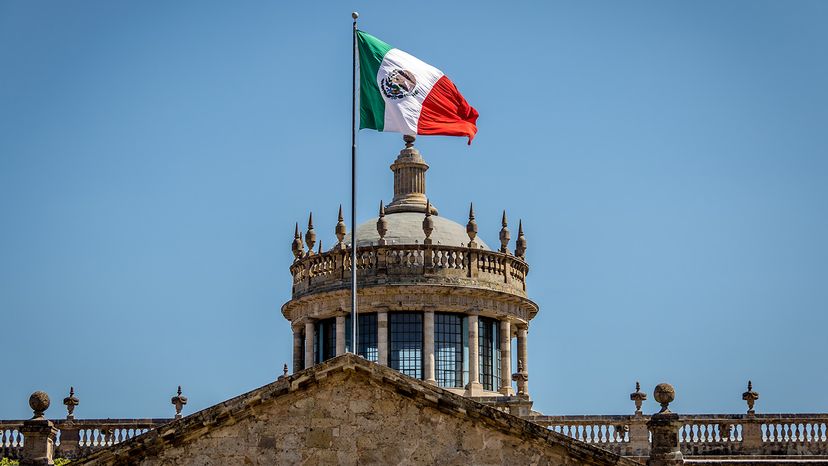
Cabanas Cultural Institute
Cabanas Cultural Institute in Guadalajara, Jalisco, Mexico. Diego Grandi / Shutterstock

The official flag, as codified by law, must include the national coat of arms with specific design elements: a Mexican golden eagle, a coiled rattlesnake, a prickly pear cactus, oak and laurel branches, and a red, white, and green ribbon.

These elements symbolize the triumph of good over evil, Mexico’s land, and the unity of its people.

Advertisement

The flag is displayed at schools, military bases, and during civic events. The president leads ceremonies to raise the flag in Mexico City’s Zócalo, reinforcing the flag’s role as a national symbol.

Whether it’s fluttering in the sun or being folded with care by the army, the Mexican flag signifies more than national pride. It reflects the history, struggles, and spirit of the Mexican people.

We created this article in conjunction with AI technology, then made sure it was fact-checked and edited by a HowStuffWorks editor.

Advertisement

Advertisement

Loading...