10 Best Countries for Education: A Controversial List

By: Lena Thaywick  | 
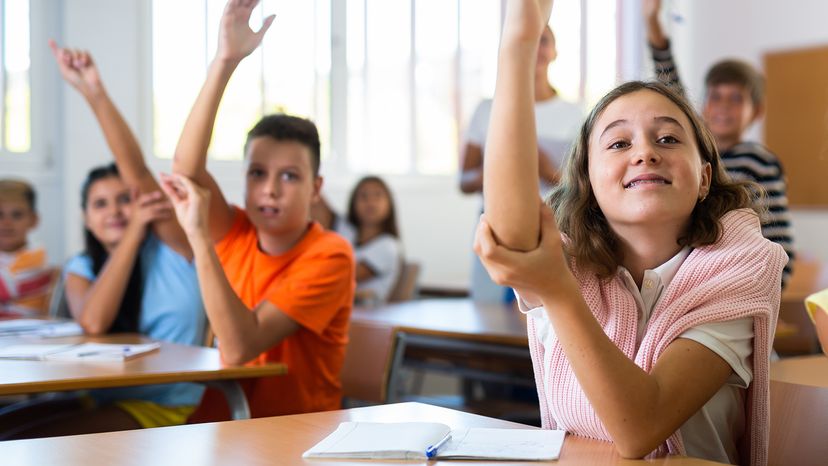
Naming the best education system in the world isn't a simple task. BearFotos / Shutterstock

Declaring the best countries for education is one of those phrases that sounds simple until you start asking what "best" really means. On the global stage, education rankings can weigh a mix of public education quality, university strength, and how well students perform in reading, mathematics, and science.

A lot of that data comes from the Programme for International Student Assessment, or PISA test, an international student assessment run by the Organisation for Economic Co-operation and Development.

Advertisement

It compares 15-year-old students across OECD countries and many other countries around the world in three subjects, then maps those scores against the OECD average on a common scale.

The following countries stand out for different reasons. Some lead with well-being and teacher trust, some with test performance, and some with a powerful mix of colleges, research, and support for international students, special education, and life after primary school.

The top five countries here are strongest on overall system quality, while the next five are still among the best countries because they excel in specific aspects such as equity, higher education, or career readiness.

Advertisement

1. Finland

Finland stays near the top of many education rankings because its education system is built around trust, highly trained teachers, and student support—rather than nonstop standardized tests.

In Finland, teaching is a high-status profession, and most teachers must complete a master's degree before leading a classroom. That helps explain why the country keeps such a strong reputation for quality, well-being and consistent performance.

Advertisement

Finland also matters because it has shaped how many other countries think about special education, mental health, and early intervention. In a world where financial pressure, health concerns, and student burnout affect children at younger ages, Finland's support-first approach still feels ahead of the curve.

2. Canada

Canada combines a strong public education network with excellent university options, which is one reason so many international students consider attending university there.

OECD data from the 2022 PISA cycle shows Canadian students scoring above the OECD average in mathematics, reading and science, a sign that the system performs well across all three subjects.

Advertisement

Canada also benefits from being a cultural melting pot. For many citizens and newcomers, that means schools are used to serving students from different language backgrounds while still keeping a high baseline of support, including services for special education.

3. South Korea

South Korea is one of the clearest examples of how discipline, high expectations, and national focus can raise scores. In East Asia, South Korea, Japan, and earlier PISA participants from China have often set the pace in math, science, and reading—which is why the region remains central to any serious conversation about top countries for education.

The OECD's 2022 results also show Korea maintaining high achievement while reporting a relatively strong sense of belonging at school compared with the OECD average. You can compare that data in Korea's PISA country note.

Advertisement

The trade-off is that South Korea's system is famous for pressure. That tension matters because education is not only about test scores on a scale. It is also about whether students can learn deeply, protect their mental health, and carry that knowledge into adult life.

4. Japan

Japan earns a high spot because its schools are orderly, its children perform well in mathematics and science, and its culture puts real weight on effort.

In the 2022 PISA results, Japan remained one of the strongest performers in the world, showing that high standards can hold even when many other countries saw declines. The country is also expanding support for students with disabilities.

Advertisement

Japan is also good at beginning early. From primary school on, students build habits around attendance, shared responsibility, and steady practice. That sounds simple, but those habits shape grades, behavior, and scientific thinking for years.

5. United Kingdom

The United Kingdom makes this list because it combines global university prestige with solid school performance. In PISA 2022, U.K. students scored above the OECD average in math, reading, and science, and the country continues to draw students who are interested in attending university in England, Scotland, Wales or Northern Ireland.

For teachers trained abroad, the U.K. is also notable because it has actively recruited overseas talent, including people in special education. That makes the country attractive not just for students, but for professionals looking at the first year of a move, degree recognition, and classroom opportunities.

Advertisement

6. Germany

Germany stands out because its education system offers several routes after primary school rather than forcing every student into the same track.

German students may move into pathways such as Hauptschule, Realschule, or Gymnasium, a structure that tries to match teaching to different goals and strengths. The result is a system with clear expectations, strong vocational options, and well-defined links between schools, apprenticeships and the labor market.

Advertisement

This approach is not perfect. Critics argue that sorting students too early can lock in social differences, but supporters say Germany does a better job than many other countries at connecting school to work, technical training, and practical life.

7. Netherlands

The Netherlands often gets less attention than Finland or Canada, but it deserves a place among the best countries because it performs well while keeping a strong focus on inclusion.

In Northern Europe and the broader European Union, Dutch schools are often cited alongside Denmark and Finland for student-centered learning, teacher autonomy, and support services.

Advertisement

It is also one of the more accessible destinations for international students in Europe because many university programs are offered in English. That mix of academic quality and openness gives the Netherlands unusual reach on the global stage.

8. Denmark

Denmark represents another Northern Europe model where well-being matters as much as raw test performance.

Danish schools put more emphasis on collaboration, social development, and trust in teachers than on constant testing—and that balance is a big reason Nordic systems keep influencing education debates around the globe.

Advertisement

Public spending is part of the story. Countries such as Finland and Denmark have devoted roughly 5 to 7 percent of GDP to education, which can help support the quality of school buildings, teacher preparation, and student support.

That does not solve every problem, but it gives government a stronger base for creating stable institutions.

Advertisement

9. Australia

Australia belongs on this list because it pairs respected universities with a school system that remains attractive to families across the world. It can be a destination for special education teachers, especially for people who are ready to meet local licensing rules.

That last point is important for professionals. To teach abroad in places like Australia, Canada, or the United Kingdom, schools usually expect degree recognition, fluency in the language of instruction, and evidence that you can manage a classroom from day one, not just in theory.

Advertisement

10. United States

The United States is complicated. On one hand, some perception-based education rankings place it near No. 1 because its colleges and universities are highly ranked internationally. On the other hand, the country's school performance is uneven.

OECD results for 2022 showed U.S. students higher than the OECD average in reading and science, but close to the OECD average in mathematics—and older reporting has placed the country behind many other nations on standardized tests.

That split says a lot about American education. The U.S. has a huge population, wide state-by-state differences, compulsory school attendance rules that vary by government jurisdiction, and enormous contrasts between wealthy districts, rural communities, and inner-city schools.

Still, it remains a major destination for international students and for teachers—including special education specialists—because the scale of the system creates opportunity at almost every level, from kindergarten to university.

Honorable Mentions

Several other places deserve mention even though they are outside this top 10. The United Arab Emirates has made inclusive schooling a legal requirement. New Zealand is often praised for support around autism and other needs. Earlier PISA cycles also showed participating regions of China posting some of the highest scores in mathematics, science and reading.

Together with the 10 countries above, those examples remind us that there is no single perfect model.

One reason this matters is simple: UNESCO describes education as a human right, which is why the quality of schools affects far more than classroom tests. It shapes citizens, public health, innovation, and how a country competes on the global stage.

For more on that idea, see UNESCO on the right to education, OECD's overview of PISA 2022 and the OECD indicator on the population with tertiary education.

We created this article in conjunction with AI technology, then made sure it was fact-checked and edited by a HowStuffWorks editor.

Advertisement

Loading...