11 Arabic-Speaking Countries Spanning Massive Continents

By: Lena Thaywick  | 
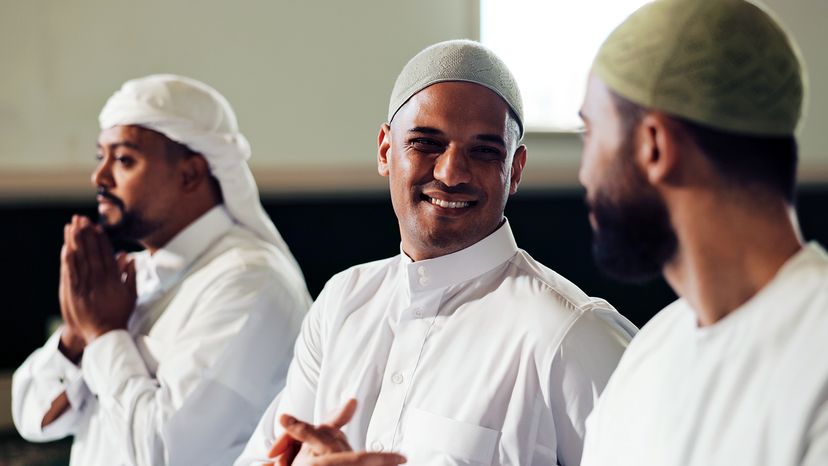
While Classical Arabic is the language of religious scholarship, many countries use regional versions of Arabic for everyday conversation. PeopleImages / Shutterstock

Exploring Arabic-speaking countries entails looking a vast linguistic map that stretches across the Middle East and North Africa.

The Arabic language connects more than 20 nations and hundreds of millions of Arabic speakers. It is an official language in many countries, and it shapes culture, law, and education across the Arab world.

Advertisement

Here are 11 key countries and territories where Arabic is spoken as a primary language or holds official status.

1. Egypt

Egypt has the largest country population in the Arab world, with more than 100 million people. Arabic is the official language and the first language for most citizens.

Egyptian Arabic is widely understood across the Arabic speaking world thanks to film and television. Modern Standard Arabic appears in news broadcasts, government documents, and formal writing, while Classical Arabic remains the language of the Holy Quran and religious scholarship.

Advertisement

2. Saudi Arabia

Saudi Arabia sits on the Arabian Peninsula and holds major religious importance in Islam. Arabic is an official language and the primary language of daily life.

The country plays a central role in the Islamic world. Saudi Arabia’s economy is strongly influenced by oil, which influences cultural exchange across western Asia and beyond.

Advertisement

3. Iraq

Iraq recognizes Arabic as an official language alongside Kurdish, making it one of several countries with two official languages. Iraqi Arabic is the dominant spoken language in most regions.

Located in western Asia, Iraq connects the Arab states of the Persian Gulf with the Levant. Arabic spread here during the early Islamic empire and became the lingua franca of administration and trade.

Advertisement

4. Syria

Syria is another Middle Eastern country where Arabic is the official language. Most citizens speak Arabic as their first language.

Different dialects appear across the country, but Modern Standard Arabic serves as the national language in education and government. Syria has long stood at the crossroads of Asia, Europe, and Africa.

Advertisement

5. Lebanon

Lebanon lists Arabic as its official language, though French and English are widely spoken. Many Arabic speakers in Lebanon use Levantine dialects at home.

The country is multilingual, thanks in part it its history of trade and migration. Arabic remains central to national identity despite this linguistic diversity.

Advertisement

6. Sudan

Sudan, located in northeast Africa, recognizes Arabic as an official language. It shares cultural and linguistic ties with both the Middle East and North Africa.

Sudan’s total population includes significant populations who speak regional languages, yet Arabic functions as the lingua franca across much of the country.

Advertisement

7. Kuwait

Kuwait lies along the Persian Gulf and lists Arabic as its official language. As in many Gulf countries, expatriate communities speak other languages, but Arabic dominates public life.

Kuwait plays an active role among Arab states in the region. Government proceedings and education rely on Modern Standard Arabic.

Advertisement

8. United Arab Emirates

The United Arab Emirates, with Abu Dhabi as its capital, recognizes Arabic as the official language. English sometimes operates as a de facto official language in business and tourism.

This federation of emirates sits on the Arabian Peninsula and connects Asia to global markets. While many residents are foreign nationals, Arabic remains the national language.

Advertisement

9. Palestine

Palestine recognizes Arabic as an official language. It forms part of the broader Arabic speaking world in the Levant.

Arabic is spoken in government, schools, and media. In neighboring Israel, Arabic holds special status.

Advertisement

10. Comoros

The Comoros Islands in the Indian Ocean list Arabic as one of their official languages alongside French and Comorian. This makes them one of several countries where Arabic shares legal standing.

Though geographically distant from the Middle East and North Africa region, Comoros maintains strong ties to the Islamic world.

11. Western Sahara

Western Sahara, a disputed territory in North Africa, uses Arabic in official contexts. It is often grouped with other Arabic speaking countries in the Maghreb region.

Maghrebi Arabic differs in sound and vocabulary from dialects in the Middle East, yet speakers across the Arab world can often communicate using Modern Standard Arabic.

12. Jordan

Jordan, located in western Asia, recognizes Arabic as its official language. Most countries in the region share similar linguistic foundations due to the historic spread of Arabic during the Islamic empire.

Jordan’s position between Iraq, Syria, Israel, and Saudi Arabia highlights how the region stretches across connected cultural and economic zones.

Arabic as a Global Language

Across these various countries, Arabic is spoken in homes, markets, universities and parliaments. It ranks among the most widely spoken languages in the world, with hundreds of millions of native speakers and many more who learn it for religious or cultural reasons.

From the Middle East and North Africa to the Comoros Islands, the Arabic speaking world spans continents. While Iran is not an Arabic-speaking country and instead uses Persian as its official language, Arabic still influences religious life there through Islam and the Holy Quran.

Understanding where Arabic is spoken helps us grasp how language shapes identity, trade, and politics across many countries. It also shows how one language can unite diverse societies across Africa, Asia, and beyond.

We created this article in conjunction with AI technology, then made sure it was fact-checked and edited by a HowStuffWorks editor.

Advertisement

Loading...