Police investigators and forensics specialists face challenging conditions when examining a crime scene. Often, the site of a crime can only be preserved for a short time, particularly if it's in a public area. Investigators must gather as much information as quickly as possible while doing their best not to disturb the scene itself. Also, crime photographers have to shoot scenes from multiple angles while attempting to preserve a sense of scale to ensure the pictures are meaningful -- both to investigators and to a future courtroom.
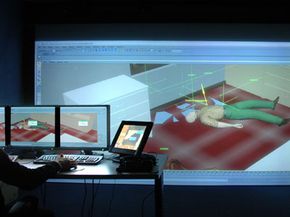
Today, some police forces are using virtual reality technology to capture and recreate a crime scene digitally. Several companies have developed numerous methods investigators can use when at the scene of a crime. Some replicate crime scenes with computer graphics similar to what you might find in a virtual reality video game. Other systems assemble photographs into a 360-degree virtual environment just like the photographic walkthroughs you may have seen on hotel and real estate Web sites. Police forces around the world have discovered that, if used properly, virtual environments can help the investigation process from its earliest stages all the way to a courtroom conviction.
Advertisement
Proponents of virtual reality suggested a forensics application for virtual environments in the initial days of the VR media blitz. Back in the '90s, virtual reality was a buzzword found in everything from news reports to Saturday morning cartoons. But as the public discovered that the actual progress in VR technology wasn't quite as advanced as the media seemed to suggest, interest waned and VR became known as a fad. Fortunately, many researchers, developers and computer scientists continued to work in the field, laying the groundwork for useful applications of VR technology.
In this article, we'll look at the two most common approaches using VR technology in crime scene recreation, as well as its advantages and disadvantages. We'll also look at the different stages in an investigation where a virtual crime scene can come in handy.
Advertisement