12 Most Gay-friendly Cities in the U.S. (4 in California)

By: Lena Thaywick  | 
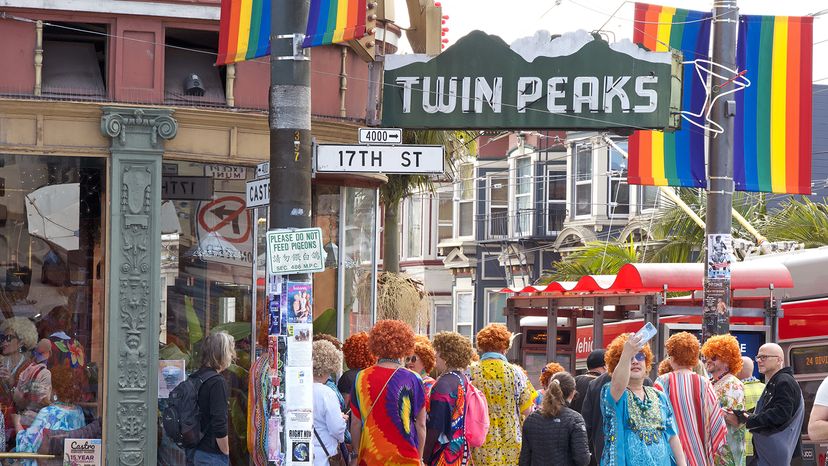
Surprising no one, San Francisco tops the list of gay-friendly U.S. cities. Sheila Fitzgerald / Shutterstock

If you are searching for the most gay-friendly cities in the U.S., you are really asking a science-of-people question: Where do laws, culture, and community line up so LGBTQ people can live ordinary lives (or at least as "ordinary" as straight people)?

There is no single "gay meter," so this list blends policy signals like the Human Rights Campaign’s Municipal Equality Index, lived reality like gay bars and lesbian bars, and the stuff you feel on a sidewalk: social attitudes, visible pride events, and whether queer people can hold hands without doing a threat assessment first.

Advertisement

1. San Francisco, California

San Francisco is the cliché for a reason. The Castro still functions like a living lab for the queer community, from queer history to modern-day hosting events that pull in visitors from other U.S. cities and countries.

Policy shows up here too. San Francisco routinely scores high on the Human Rights Campaign’s Municipal Equality Index, a scorecard that tracks city-level protections tied to sexual orientation and gender identity. In many ways, Harvey Milk’s legacy still shapes the city’s civic DNA.

Advertisement

2. New York City, New York

New York City is a mega metro area with a huge overall population, which means it can support niche spaces: LGBTQ bars, queer bookstores, and whole neighborhoods that feel like home.

It also has deep queer history tied to the modern LGBTQ rights movement. Stonewall sits in New York, and today you still see gay nightlife spill out into the street in a way that signals, “Yes, you belong here.”

Advertisement

If you are comparing New York to European cities, think of it like a dense, loud version of a big-capital city nightlife zone, except spread across multiple boroughs.

3. Los Angeles, California

Los Angeles runs on networks. That matters for LGBTQ residents because it creates many overlapping scenes, from West Hollywood nightlife to beach-town queer community meetups.

LA also has a thick layer of LGBTQ people in entertainment, politics, and business, which helps normalize visibility. You can feel it during pride events, when the city goes full-on “open set” and turns celebration into a public signal of safety.

Advertisement

4. Chicago, Illinois

Chicago has long been a Midwest anchor for LGBTQ friendly cities, with a strong bar culture and established gay neighborhoods.

It also checks the civic leadership box. Chicago made history in 2019 by electing Lori Lightfoot as its first openly LGBTQ—and first Black female—mayor. It changes the policy conversation and the vibe of an average city hall.

Advertisement

On a related note, one way to sanity-check the policy landscape around sexual orientation and gender identity protections is MAP’s Equality Maps.

5. Washington, D.C.

Washington, D.C. is a capital city where advocacy is literally part of the local economy, which makes LGBTQ rights visibility feel built-in.

Dupont Circle, in particular, has decades of queer history as a gathering point and “gayborhood.” The National Park Service even notes the area’s long connection to the local LGB community around Dupont Circle’s landmark park space.

Advertisement

6. San Diego, California

San Diego combines beach-city ease with serious community infrastructure, including LGBTQ community centers and a busy calendar of pride events.

It also has a clear political milestone: Todd Gloria became the first openly gay mayor of San Diego in 2020, which matters because leadership can accelerate protections and signal acceptance from the top down.

Advertisement

7. Boston, Massachusetts

Boston brings big New England energy: compact neighborhoods, lots of universities, and a long history of civic activism. For LGBTQ residents, that translates into dense community networks and a steady flow of events, from campus-based queer community groups to citywide pride events.

In practice, Boston normalizes gayness in the everyday sense: you see queer people, you see allies, and you see a culture that treats inclusion as commonplace.

Advertisement

8. New Orleans, Louisiana

New Orleans is one of those rare places where nightlife and tradition overlap in a way that makes queer people visible year-round, not just during Pride Month.

Its gay bars and LGBTQ bars sit alongside broader city culture that prizes self-expression. The result is a social ecosystem where gay couples blend into the street scene. It helps that the city’s identity centers on hosting events, and that openness extends to the queer community.

Advertisement

9. Las Vegas, Nevada

Las Vegas is built for adult fun, so it is no surprise that gay nightlife fits naturally into the city’s core identity.

But the more important point is scale. A larger city with a tourism engine can support LGBTQ people who want community without everyone knowing everyone. That anonymity can feel safer, especially for people moving from less accepting places.

Advertisement

10. Salt Lake City, Utah

Salt Lake City often surprises people, which is exactly why it belongs on any serious list of gay cities.

Even in a state with more mixed social attitudes, a metro area can build its own local norms. Look for concentrated neighborhoods, consistent pride events, and city-level policies that buffer residents from the broader state landscape.

11. San Jose, California

San Jose is sometimes overshadowed by San Francisco, but it offers something different: an average metro area vibe pervaded by big tech with lots of LGBTQ professionals.

For many LGBTQ people, that translates into stability: jobs, healthcare access, and a growing set of gay-owned businesses.

If you want a data-driven view of how business ecosystems support LGBTQ residents, the National LGBT Chamber of Commerce (NGLCC) runs an LGBT Business Enterprise (LGBTBE) certification that helps organizations identify and engage with LGBTQ-owned businesses.

12. Miami, Florida

Miami gives you an East Coast gateway feel with Latin American influence, plus a party culture that supports visible gay nightlife.

Florida politics can complicate the picture, so Miami stands out because the city’s local culture can be more welcoming than the surrounding average city experience elsewhere in the state. In other words, city-level support can diverge from state-level signals.

How to Read 'Friendly' Like a Scientist

If you are comparing friendly cities, look for three things that show up again and again:

  • Local protections: Check municipal policies and services using the Human Rights Campaign’s Municipal Equality Index, where some cities earn a perfect municipal equality score or top municipal equality score.
  • State backstop: Use the Movement Advancement Project’s Equality Maps to see how marriage equality, nondiscrimination, sexual orientation, and gender identity protections look at the state level.
  • Community density: Count signals like LGBTQ population size, LGBTQ bars, gay bars, lesbian bars, and pride events.

A city can score well on paper and still feel hard if housing costs push out poor people, or if nightlife exists but community support is thin. Think of it like a national average vs. reality problem: averages hide pockets of risk.

4 Quick Reality Checks Before You Book a Trip or Move

A few simple checks help you move from "sounds LGBTQ friendly" to 'will feel safe for me, my partner, and my friends":

  1. Scan upcoming pride events and community calendars.
  2. Look up LGBTQ community centers and queer community resources.
  3. Search for gay nightlife options beyond one strip of bars.
  4. Check whether local government has a strong commitment to trans people and broader LGBTQ rights.

We created this article in conjunction with AI technology, then made sure it was fact-checked and edited by a HowStuffWorks editor.

Advertisement

Loading...