Ed Gein, Inspiration for 'Psycho,' Never Served Prison Time

By: Lena Thaywick  | 
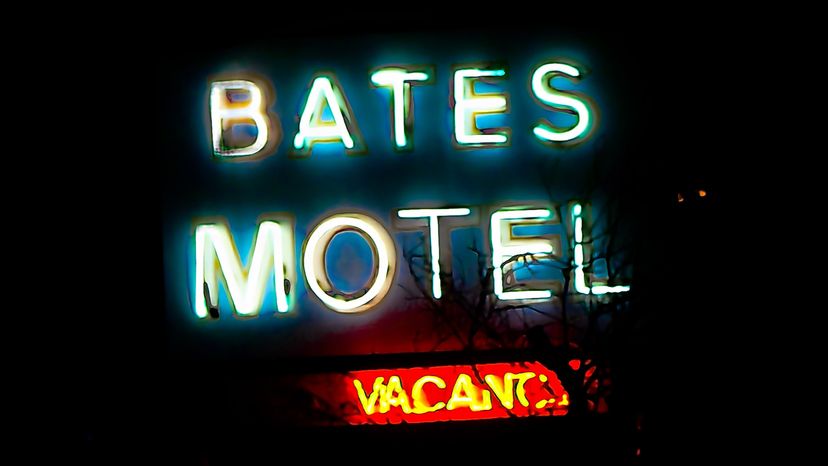
Many recognize the fictional Bates Motel from Alfred Hitchcock's "Psycho," which took heavy inspiration from the life and crimes of Ed Gein. Usa-Pyon / Shutterstock

If you know anything about horror movies, you've heard the name Ed Gein. This quiet man from rural Wisconsin inspired some of the most terrifying characters in film history.

But the real story of Edward Theodore Gein is more bizarre than anything Hollywood could dream up.

Advertisement

Gein confessed to murdering two women and robbing graves for body parts, making him a murderer and grave robber rather than a typical serial killer. What authorities discovered at his home in 1957 changed the way Americans thought about murder, madness, and the monster next door.

Gein's Story Begins in Plainfield

Ed Gein's life started off quiet enough. Born in 1906, he grew up in Plainfield, Wisconsin, under the strict rule of his domineering mother, Augusta Gein. She was a deeply religious woman who taught her sons that all women (except her) were sinful and wicked.

Gein's father, George Gein, was an abusive alcoholic who beat his sons and struggled to hold a job. After Gein's father died in 1940, Ed and his older brother Henry stayed on the family farm.

Advertisement

In 1944, Henry died in a fire under mysterious circumstances, and some believe Ed was involved. That left him alone with Augusta until Augusta's death in 1945.

After losing his mother, Gein became reclusive. He boarded up Augusta's room and lived in filth in the rest of the Gein farm. His emotional grip on reality weakened. He became obsessed with death, anatomy, and—eventually—collecting human body parts.

Advertisement

The Crimes That Shocked a Nation

In 1957, Bernice Worden, a local woman, vanished. The last receipt in her hardware store was made out to Ed. When police searched Gein's home, they found her body in a shed, body hanging by the ankles, gutted like a deer.

Inside, the horror deepened. Authorities discovered a collection of human faces, human skulls, body parts, and a woman suit sewn from human skin. There were masks, a belt made of nipples, and furniture upholstered with flesh.

Advertisement

Gein admitted to robbing graves and murdering Worden and Mary Hogan, another missing woman. The rest of the remains came from bodies he stole from local graveyards. These were the remains of at least 15 different women.

Gein's crimes were both shocking and surreal. His behavior earned him the nickname the "Plainfield Ghoul" and the "Butcher of Plainfield."

Advertisement

Trial, Hospitalization, and Death

Declared criminally insane, Gein was found unfit to stand trial in 1957. He was committed to Central State Hospital, and later transferred to the Mendota Mental Health Institute, where Gein remained until his death.

He was diagnosed with schizophrenia and spent his days drawing and reading, occasionally cooperating with staff. Despite the media storm, Gein served no prison time. Instead, Gein spent decades in psychiatric care.

Advertisement

In 1984, Gein died from respiratory failure related to cancer. He was buried in Plainfield Cemetery beside his family. His grave became a target for vandals and souvenir hunters until the headstone was removed.

Pop Culture Cannibalizes the Story

Though only two women are in his official kill count, Gein’s impact on American horror is massive. His story inspired Alfred Hitchcock’s "Psycho," with Anthony Perkins portraying Norman Bates, a character loosely based on Edward Gein. The film's success launched a new era of psychological horror.

In 1974, "The Texas Chain Saw Massacre" introduced Leatherface, who also drew from Gein's story. Later, Buffalo Bill from "The Silence of the Lambs" combined traits of Gein, Ted Bundy, and others.

Advertisement

More recently, actor Charlie Hunnam was cast in a series titled "Monster: The Ed Gein Story."

Countless documentaries and books have dissected Gein's crimes. The strange psychology, the attachment to his mother, and the grotesque trophies created from corpses continue to intrigue and horrify true crime fans.

Advertisement

Legacy of a Real-life Horror

Ed Gein's house mysteriously burned down in 1958, before it could become a morbid tourist attraction. Still, visitors flock to the remnants of Gein's property, searching for traces of one of America’s most infamous murderers.

Despite no confirmed links to other deaths, some believe he may be connected to unsolved cases like that of Victor Harold Travis and Raymond Burgess. These leads were never confirmed, but they add to the shockingly true story of a man who blurred the line between myth and madness.

Advertisement

Gein never seemed to fully grasp the horror he caused. His case changed the way the public viewed psychiatric institutions and the definition of a serial killer. While his crimes were singular in execution, they continue to haunt popular culture, forensic psychology, and horror cinema.

We created this article in conjunction with AI technology, then made sure it was fact-checked and edited by a HowStuffWorks editor.

Advertisement

Advertisement

Loading...