Direct Democracy Allows Citizens to Decide Laws Without Representatives

By: Lena Thaywick  | 
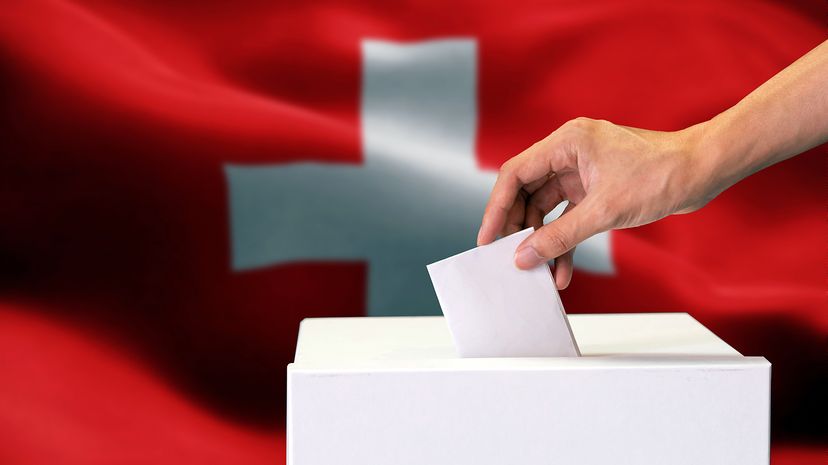
Switzerland has established one of the world’s most extensive direct-democracy systems. Twinsterphoto / Shutterstock

In politics, direct democracy means giving everyday people—not just politicians—a direct say in laws and policies. Unlike a representative democracy, where elected officials make decisions on behalf of the people, direct democracy allows citizens to vote on political issues themselves.

This isn't just a theoretical model. Versions of direct democracy operate today in modern liberal democracies through tools like ballot initiatives, referendum votes, and citizens initiatives.

Advertisement

These direct democratic instruments allow voters to bypass legislative bodies and decide laws directly. Such reforms offer a way to address the democratic deficit that can emerge when political institutions seem out of touch with the people.

A Quick History of Direct Participation

The origins of direct democracy can be traced back to ancient Athens, where male citizens gathered in an Assembly to vote directly on laws.

It was a "true" direct democracy in that it bypassed representatives, but the standards of the time meant excluding significant portions of the population, including women and enlsaved people.

Advertisement

In the modern era, Switzerland established one of the world’s most extensive direct-democracy systems, and U.S. states (for example, Oregon, California and others since the early 1900s) adopted citizen initiatives and referendums as part of their governance.

Switzerland requires popular votes on constitutional changes and allows citizens’ initiatives, while states like California introduced statewide initiative and referendum processes during the Progressive Era.

California ballot proposition elections are a textbook case: Voters cast ballots on everything from tax policy to constitutional amendments. Other states incorporated direct democracy into their charters, reshaping how laws are made and how political representation is expressed.

Advertisement

How Direct Democracy Works Today

Direct democratic mechanisms vary, but here are the most common:

  • Ballot initiatives: Citizens propose a new law by collecting signatures. If enough are gathered, the proposal goes to a direct vote.
  • Referendums: Voters approve or reject an existing law passed by the legislature.
  • Citizens initiatives: These are similar to ordinary ballot initiatives, but in many cases they involve proposing constitutional amendments or triggering a referendum to veto a law passed by the legislature.

These direct democratic processes are especially common at the state and local level. Research shows that the presence of ballot initiatives can boost voter turnout, though the effect varies.

Advertisement

For instance, midterm election turnout in U.S. states with citizen initiatives was about about 7 to 9 percent higher than in states without initiatives during the 1990s (after controlling for other factors). However, the magnitude of this turnout increase can differ by election and context, so participation gains are not guaranteed in every case.

In Germany, all of the federal states (Länder) now provide for referendums or citizen-initiated measures at the local level, and such direct votes are regularly used to decide local issues. Following reunification in 1990, every German state introduced direct democratic options for municipalities, making Germany one of the leaders in Europe for the number of local referendums held each year.

Across Europe, governments have indeed been experimenting with new participatory democratic tools. In recent years there has been a surge of citizens’ assemblies, citizens’ panels, and other deliberative forums organized or supported by various European countries, aiming to involve ordinary people more directly in policymaking.

This turn in political participation has led to substantial growth in citizen participation initiatives in the European Union (for example, France convening a citizens’ assembly on climate, Belgium’s German-speaking community creating a permanent citizens’ council, Spain’s Madrid establishing a civic assembly, etc.).

Advertisement

Pros and Cons of Going Direct

Advocates argue that direct democracy leads to higher political equality, better political culture, and increased reflection of voter preferences. It acts as a check on the political power of representative institutions and boosts transparency in the political system. Some believe it provides a more accurate form of political representation than relying solely on elected representatives.

Critics argue that direct democracy can be hijacked by special interests with deep pockets. In California, for example, special-interest groups have spent small fortunes on ballot measure campaigns, knowing that greater spending often increases the chances of swaying voters and winning a favorable outcome.

Advertisement

In practice, this means wealthy organizations and donors can heavily influence initiative campaigns through advertising and media, raising concerns about unequal influence in supposedly grassroots decision-making.

Policymakers and scholars caution that referendums often oversimplify complex issues, since average voters may not have access to full information or expert analysis during a campaign. Elected representatives or specialists usually have time to study and debate intricate policy details, whereas a mass vote might force a quick yes/no decision on a complicated question.

In other words, direct democracy can reduce nuanced, technical matters to simplistic slogans, potentially crowding out expert input in the decision process.

There are concerns about how racial and ethnic minorities fare under majority rule. Historically, majority-vote initiatives have occasionally been used to roll back minority rights.

Such cases underscore how direct democracy, without safeguards, can unintentionally jeopardize vulnerable communities’ interests.

Advertisement

A Balancing Act in Modern Democracies

So, does direct democracy replace or enhance representative government? Political science research generally finds that direct democracy works best as a complement to a representative democratic system, not as a replacement.

When citizen-initiative and referendum processes are integrated into a representative system, they can amplify the public’s voice in policymaking while preserving the benefits of legislative deliberation and expertise.

Advertisement

In practice, modern democracies that use direct democracy still rely on elected bodies for day-to-day governance, with citizen votes serving as an additional check and source of input.

Success at the State Level

The initiative process has indeed produced major policy changes in both environmental and health sectors. For example, California’s Proposition 20 (1972) was a citizen initiative that established a coastal conservation commission, creating one of the nation’s first large-scale coastal protection zones after a massive oil spill.

In the realm of healthcare, voters in at least seven U.S. states (including Maine, Idaho, Nebraska, etc.) used ballot initiatives between 2017 and 2020 to expand Medicaid coverage, extending health insurance to hundreds of thousands of low-income residents despite initial legislative resistance.

These examples illustrate how direct democracy can enact sweeping changes in policy areas when elected officials have been unwilling or unable to do so.

Direct Democracy vs. Constitutional Law

National-level direct democracy is often constrained by constitutional law, meaning referendum results may not be legally binding or may not even be permitted in certain domains.

In many countries, referenda can only occur under specific conditions and may be legally advisory rather than self-executing. For instance, Germany’s Basic Law provides very little scope for federal referendums, effectively making nationwide direct votes extremely rare and subordinate to the representative system.

Consequently, even when voters cast ballots in a national referendum (such as the U.K.’s Brexit vote or others), the binding force of that vote depends on political parties and legal contexts, and courts or constitutions sometimes nullify or limit direct-vote measures that conflict with higher law.

Advertisement

Scaling Direct Democracy

Scaling direct democracy beyond local and state levels raises real challenges. Indeed, nationwide ballot initiatives or referendums are uncommon in most democracies due to practical and legal barriers.

Aside from exceptional cases (e.g., Switzerland’s frequent national votes), most countries do not routinely hold national referendums. Constitutional frameworks often limit such exercises.

Advertisement

Additionally, direct democracy demands logistically challenging actions, such as gathering millions of signatures or organizing a single issue vote across an entire country. These factors explain why direct democracy is typically practiced at state or local levels, not attached to every national election.

On occasion, governments have turned to nationwide referendums as a tool for resolving contentious issues or gauging public sentiment. For example, the United Kingdom held eight referendums between 1997 and 2016 on major governance questions (such as devolution, EU membership, etc.), reflecting a trend of using ad hoc national votes to legitimize decisions on divisive topics.

Similarly, a number of European countries have called one-off referendums on issues like constitutional changes or EU treaties to directly consult voters. These instances remain relatively infrequent, but they show that even in representative systems, leaders sometimes experiment with direct democracy at the national level when parliamentary solutions prove controversial or insufficient.

Fine-Tuning Democratic Innovations

Recent reforms highlight the adaptability of democratic systems in expanding participation.

For instance, several jurisdictions have lowered the voting age to 16 for certain elections or referendums; Scotland and Wales now allow 16- and 17-year-olds to vote in their parliamentary and local elections, a change aimed at increasing youth engagement in the political process.

Likewise, in the German state of Baden-Württemberg, the government in 2015–2016 lowered the signature thresholds required to trigger referendums and introduced new guidelines for public participation, making it easier for citizens to put issues on the ballot.

Reforms like these, along with procedural innovations (e.g. citizens’ initiative review commissions or mixed deliberative panels), demonstrate a continuous effort to adjust direct democracy mechanisms for greater inclusion and effectiveness.

Tech and Political Decisions

Digital technology is beginning to open new channels for direct citizen involvement in decision-making. One emerging model is “liquid democracy,” which uses online platforms to let people either vote directly on proposals or delegate their vote to a representative of their choice in a flexible, issue-by-issue way.

This kind of platform enables continuous participation and real-time feedback, potentially engaging a broader segment of the population beyond those who traditionally vote in person.

Around the world, various e-democracy tools—from online petition sites to government-sponsored e-consultations and blockchain-based voting pilots—are being tested to enhance accessibility and participation in democratic processes.

In a world where many seek more direct democracy, striking the right balance between speed and stability, inclusion and expertise, remains crucial.

Whether used for shaping constitutional amendments, revising an existing law, or measuring public sentiment, direct democracy continues to evolve as a defining element of modern governance.

We created this article in conjunction with AI technology, then made sure it was fact-checked and edited by a HowStuffWorks editor.

Advertisement

Advertisement

Loading...