The Witness Security Program we know today is an evolution of individual cases that began in the early 1960s and were investigated by the Organized Crime and Racketeering Section (OCRS) of the U.S. Department of Justice's office. This group was led by U.S. Attorney General Robert F. Kennedy and included Gerald Shur, the man who would go on to create WITSEC.
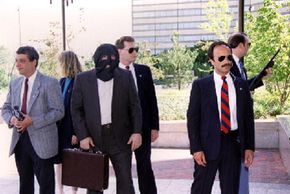
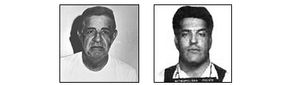
Shur, who was a U.S. Attorney at the time, was involved in several cases in which the federal government protected witnesses who testified against organized crime. Among these witnesses were Joseph Valachi, Joseph Barboza and Larry Gallo.
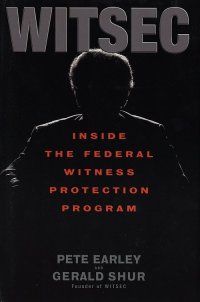
In 1969, Sen. John L. McClellan of Arkansas introduced a large crime bill. G. Robert Blakely, a member of McClellan's staff, had drafted much of this bill. Blakely took Shur's ideas for a witness protection program and inserted it into the crime bill, according to Shur's book, "WITSEC."
The Federal Witness Protection Program was authorized as part of the Organized Crime Control Act of 1970. Within this law was the section Title V: Protected Facilities for Housing Government Witnesses, which outlines the basic tenets of what would become the Witness Security Program.
Although the law now provided for a program to protect witnesses, many details of the program and the day-to-day administration still had to be formulated. Shur suggested that the Marshals Service protect, hide and relocate witnesses and fund enforcement operations of the program. Soon this program became known as WITSEC, an abbreviation of "witness security."
This law gave the Department of Justice wide latitude to accommodate what attorneys deemed necessary to protect witnesses.
Nearly 15 years later, the powers of the Attorney General with respect to the Witness Security Program were expanded by the Comprehensive Crime Control Act of 1984. This new Act provided for the protection of certain relatives and associates.
Today, the WITSEC Program is essential to the prosecution of hundreds of cases. Without it, many witnesses would never come forward or would be killed if they did. With the protection provided by the program, witnesses can testify and then disappear when the trial is over, and the criminals they testify against are almost always convicted.