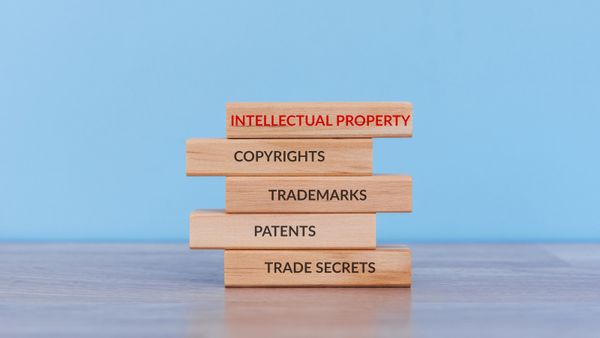
You see copyright dates in every book and on every other published work, and many products carry the patent symbol somewhere on their packaging. You also hear about copyrights and patents when there are questions about who owns the rights to a certain work or product. The United States government maintains copyright and patent programs to ensure everybody is able to profit from their original creative works. Of course, financial profit isn't the only reason to copyright or patent something: The programs are simply meant to give a creator legal control over when, where and how his or her creation is published or used in the United States. U.S. protection is extremely broad -- most kinds of creative work are copyrightable -- but it's also fairly amorphous, full of subjective interpretations and legal details.
The broadest creative-work protection the U.S. government offers is the copyright. Something that is copyrighted may not be reproduced, published or copied without permission from the copyright-holder. U.S. copyright law says that all "original works of authorship" created after January 1, 1978 in a fixed tangible form are protected for the duration of the creator's life plus 70 years. Companies hold copyrights for 95 to 120 years depending on whether or not the work has been published. A huge variety of creative work falls under this "original works of authorship" criteria, but the U.S. Copyright Office groups copyrightable material into eight general categories:
Advertisement
- Literary works
- Pictorial, graphic, and sculptural works
- Musical works
- Sound recordings
- Dramatic works
- Pantomimes and choreographic works
- Motion pictures and other audio-visual works
- Architectural works
You cannot copyright works that do not have a tangible form. A dance, for example, must have the choreography written down before it can be protected by copyright. You also cannot copyright basic names, titles, short phrases, and lists of common-property information (phone books, periodic tables, etc.). Ideas are not protected by copyright; only the specific presentation of the ideas is copyrightable.
One of the coolest things about copyright protection is that it is automatic. If you create an original work in the United States, it is instantly copyrighted, without you doing anything except putting it into a tangible form. You can, however, take a few extra steps to make the copyright "stronger." The first thing to do is simply make a notice of copyright on your work. A copyright notice includes three basic elements:
- The word "Copyright," the abbreviation "Copr.," or the symbol "©"
- The year of first publication
- The name of the copyright holder
This question of the day answer, for example, is ©, How Stuff Works, 2000.
For a small fee, you can also register copyrighted material with the U.S. Copyright Office. This proves when you authored an original work, giving you much better legal footing in any copyright disputes. For registration forms and registration information, check out this page on the U.S. Copyright Office site..
Patents work a bit differently from copyrights, but you can think of them as copyrights for inventions (see this page to find out what constitutes an invention). All a patent really does is give the patent-holder the right to stop others from producing, selling or using his or her invention. Unlike copyrights, patents protect the idea or design of the invention, rather than any tangible form of the invention, and so patenting something is a much trickier procedure than copyrighting something. To patent something you have invented (whether it's a product or some sort of process), you have to demonstrate that your invention is a significantly original creation -- that it is unique enough to distinguish it from existing inventions and that it is innovative enough that it wouldn't be obvious to others. Patents provide protection for 20 years. After that, the invention is public property.
If you are interested in patenting an invention, the first thing to do is check for similar inventions in the U.S. Patent and Trademark Office's Patent Database (the Patent Office also employs people who will perform this service for you). If your invention has not already been patented or submitted for a patent, you can fill out a patent application. The procedures involved in applying for a patent are fairly complicated, so it may be a good idea to employ a patent lawyer at this stage in the process. For more information on obtaining a patent, check out this page.
Advertisement