
The Laws of Photography
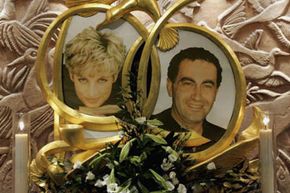
Princess Diana’s 1997 fatal car crash during a high-speed paparazzi chase instigated a string of photography-related legislation. Consequently, any photographer who pursues Catherine, Duchess of Cambridge (formerly known as Kate Middleton), in the same manner risks litigation in the event of an accident [source: Harman]. In fact, by the time she wed Prince William, the Duchess of Cambridge had already won settlements in court for paparazzi privacy breaches [source: Harman].
In California, paparazzi are legally prohibited from trespassing on private property, using telephoto lenses to survey private property or pursuing targets in cars [source: LaPorte]. However, the frequency of paparazzi-celebrity run-ins since January 2010, when the law was last amended, have indicated that the legislation’s bark might tougher than its bite.
Advertisement
Laws regarding public photography have always been a gray area. In the United States, photographs that are taken for editorial use in a public place generally enjoy Constitutional protection under the right of free speech. There are exceptions, however. Here are just a few of the gray areas:
- Police crime scenes, disasters, fires or riots are considered secured emergency areas. Photography isn’t legal in these situations without permission.
- Even editorial photographs can come under scrutiny when a caption is added. If photo captions imply something false or libelous about the person in the photo, then they aren't legally protected free speech.
- Photos of a person in a public place can’t be used to promote any goods or services without permission.
The controversy surrounding anti-paparazzi legislation comes down to the question of where to draw the line between legitimate news gathering and invasions of privacy. If laws are left as they are, a celebrity's privacy -- and, in some cases, his or her life -- may continue to be endangered by the ruthlessness of some photographers [source: LaPorte]. On the other hand, if the laws become too restrictive, then the freedom of the press could be jeopardized, and for that reason, a judicial tension remains between the two.
With the cultural appetite for celebrity voyeurism, it’s questionable whether the public is even concerned about anti-paparazzi legislation. As long as images of the rich and famous committing foibles both minor and monstrous continue to arrest our attention -- and sway our online traffic and magazine purchases -- the paparazzi mobs will continue to swarm and snap. After all, they’re only giving us what we want: proof that celebrities are imperfect, just like us.
Related Articles
Sources
- Dowell, Ben and Robinson, James. “Amy Winehouse wins court ban on paparazzi at her home.” The Guardian. May 1, 2009. (Oct. 28, 2011) http://www.guardian.co.uk/music/2009/may/01/amy-winehouse-big-pictures-paparazzi-privacy
- Harman, Danna. “How Princess Diana changed the way paparazzi pursue Kate Middleton.” The Christian Science Monitor. April 29, 2011. (Oct. 28, 2011) http://www.csmonitor.com/World/Europe/2011/0429/How-Princess-Diana-changed-the-way-paparazzi-pursue-Kate-Middleton
- Hirsch, Afua. “Sienna Miller sues paparazzi for harassment.” The Guardian. Oct. 30, 2008. (Oct. 28, 2011) http://www.guardian.co.uk/lifeandstyle/2008/oct/31/sienna-miller-big-pictures-darryn-lyons
- Independent. “Sienna Miller: Hacking’s heroine.” Sept. 23, 2011. (Oct. 28, 2011) http://www.independent.co.uk/news/people/profiles/sienna-miller-hackings-heroine-2359415.html
- LaPorte, Nicole. “The Do-Nothing Paparazzi Law.” The Daily Beast. Feb. 25, 2010. (Oct. 28, 2011) http://www.thedailybeast.com/articles/2010/02/25/the-do-nothing-paparazzi-law.html
- Loomis, Nicole Zsuzsanna. “Paparazzi.” University of Southern California. May 2009. (Oct. 28, 2011) http://digitallibrary.usc.edu/assetserver/controller/item/etd-Loomis-2851.pdf
- Nordhaus, Jamie E. “Celebrities’ Rights to Privacy: How Far Should the Paparazzi Be Allowed to Go?” The Review of Litigation. Vol. 18. Issue 2. (Oct. 28, 2011) http://www.asc.upenn.edu/usr/ogandy/c734%20resources/celebrities%20rights%20-%20nordhaus.pdf
- NPR. “Brad Pitt: ‘Moneyball, Life and ‘The Stalkerazzi’.” Sept. 22, 2011. (Oct. 28, 2011) http://www.npr.org/2011/09/22/140629778/brad-pitt-moneyball-life-and-the-stalkerazzi
- Rose, Lacey. “The Most Expensive Celebrity Photos.” Forbes. July 18, 2007. (Oct. 28, 2011) http://www.forbes.com/2007/07/17/celebrities-photojournalism-magazines-biz-media-cx_lr_0718celebphotos.html
- Samuels, David. “Shooting Britney.” The Atlantic. April 2008. (Oct. 28, 2011) http://www.theatlantic.com/magazine/print/2008/04/shooting-britney/6735/
- Telegraph. “Ron Galella and Jackie Onassis in pictures.” Nov. 25, 2010. (Oct. 28, 2011) http://fashion.telegraph.co.uk/galleries/TMG8129874/Ron-Galella-and-Jackie-Onassis-in-pictures.html
- TIME. “The Press: Paparazzi on the Prowl.” April 14, 1961. (Oct. 28, 2011) http://www.time.com/time/magazine/article/0,9171,872287,00.html
- Wood, Gaby. “Camera, movie star, Vespa…it all began on the Via Veneto.” The Guardian. Sept. 23, 2006. (Oct. 28, 2011) http://www.guardian.co.uk/media/2006/sep/24/pressandpublishing1
- Yancy, Kitty Bean. “Tour L.A. with a real-life paparazzo.” USA Today. Dec. 23, 2010. (Oct. 28, 2011) http://travel.usatoday.com/destinations/dispatches/post/2010/12/las-new-paparazzi-tour/135493/1