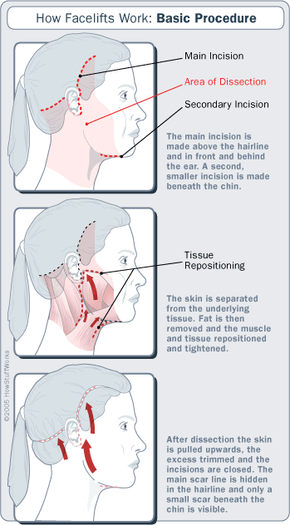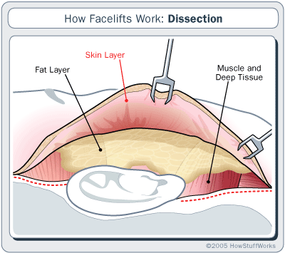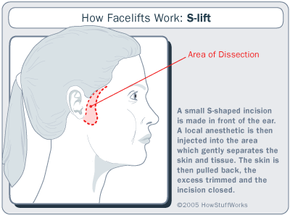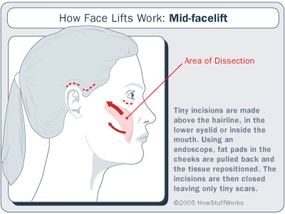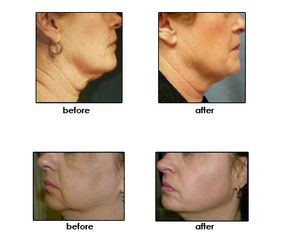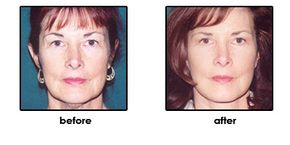
Nothing can stop the aging process. But for those with the money and motivation, cosmetic surgery can reverse at least some of the ravages of time. A lot of people are willing to pay a high price for a more youthful appearance. More than 150,000 people in the United States had a facelift in 2004, according to The American Society for Aesthetic Plastic Surgery [ref].
In this article, we'll see how plastic surgeons are offering up the promise of youth in the form of facelift surgery. We'll learn how the procedure is performed, how dramatic the results can be, and what risks are involved. But before getting into facelifts, let's look at how the skin on our faces age.
Advertisement
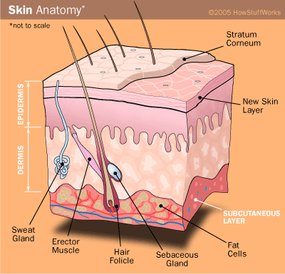
Skin goes through many changes as we get older. Cells divide slower. The dermis, or lower layer of skin, gets thinner. It is comprised of several different types of tissue, including elastin and collagen. Elastin gives the skin its elasticity, and collagen keeps the skin taut. Eventually both of these proteins begin to break down, causing the skin to loosen. The loss of elasticity makes the skin and underlying tissue more susceptible to the effects of gravity. Instead of springing back when pulled, the skin sags. Additionally, the muscle and tissue composition under the skin changes, leading to wrinkles.
A facelift can't completely erase the signs of age, and it can't fix all problems -- for example, sagging eyelids, eyebrows, or skin discoloration. To correct these problems, a patient would need to undergo other procedures (such as an eye lift, brow lift, or chemical peel).
In the next section, we'll learn exactly what happens during a facelift procedure.
Advertisement