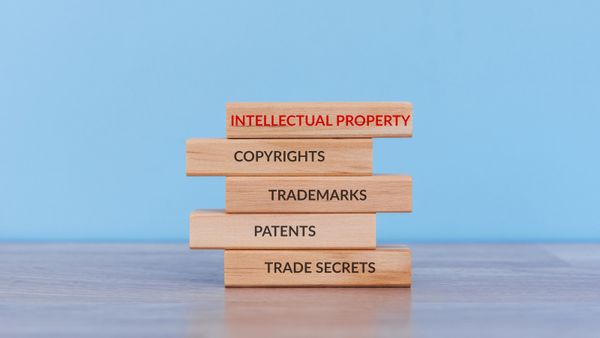
The U.S. Constitution provides the legal basis for the grant of copyright protection in the United States. According to the Constitution, "Congress shall have power...to promote the progress of science and useful arts, by securing for limited times to authors and inventors the exclusive right to their respective writings and discoveries. Copyrights and patents are the only forms of intellectual property with an historical basis in the Constitution. All other forms of intellectual property rely on common or statutory law for their authority.
Over the years, Congress has enacted a number of statues that define the rights that authors have in their creations, but all of these statutes derive their authority from the Constitution. In this article, you will learn what a copyright is and how it comes into existence.
Advertisement
A copyright protects the expression of an idea. Unlike a patent, which protects the idea itself, a copyright protects only the expression. The idea for a new mouse trap can be protected by a patent while the expression of that idea through drawings, pictures and words can be protected by a copyright.
A copyright comes into existence as soon as the work is fixed in a tangible medium of expression, so copyright exists in a work as soon as the author completes the music composition or play. The author of the work initially owns the copyright. However, ownership of the right may be transferred to others. If the work is created by an employee, the employer is considered to be the author and owns the copyright as a work for hire.
As the owner of the copyright, the author has the exclusive right to make copies of the work, display and perform the work publicly and to distribute copies of the work to the public. These exclusive rights last for the life of the author plus 70 years. The copyright in a work made for hire, however, lasts for a fixed term of 95 years from the date of the work's creation.
In order to qualify for copyright protection, a work must be original to the author. To be original, the work:
- must have been independently created by the author rather than being copied from other work(s) and
- must have at least a minimal degree of creativity
If these two conditions are not met, the work will not qualify as original and is not entitled to copyright protection. However, a work still qualifies for copyright protection if it includes non-original elements. For example, if an author rearranges non-original elements in an original way, the compilation will be considered original and qualify for copyright protection.
It is important to note that a copyright protects only the expression of an idea. It does not protect any functional features or characteristics of the work.
Related HowStuffWorks Articles
More Great Links
- The United States Patent and Trademark Office
- Search the U.S. Patent Database
- The National Inventors Hall of Fame