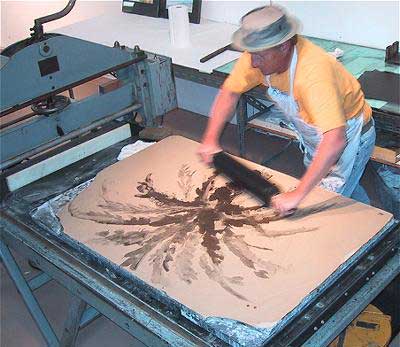
Ever since man first created his earliest works of art thousands of years ago, there have been two parts to the artistic process. The first part happens in the artist's mind, where he or she conceives of the idea that will be portrayed in the work. The second part happens in the artist's hands, as the idea is translated into a specific medium that other people can appreciate. Visual mediums can be quite diverse and include:
- Charcoal on cave walls (one of the earliest mediums)
- Charcoal, crayon, pencil, watercolor or ink on paper
- Oil paint on canvas
- Paint on wet plaster (fresco)
(We've ignored sculpture, music, dance, film, etc. and have focused on visual media that are comparable to the topic of this article.)
When the printing press first appeared on the scene, it opened up a new medium in the form relief prints. The artist could carve an image onto wooden or metal blocks, ink the block and impress it on paper. Relief printing created the first form or reproducible art.
The problem with relief printing is that the artist must carve the image, and the carving action is unnatural to an artist who normally works in a medium like paint and pencil.
More About Art
|
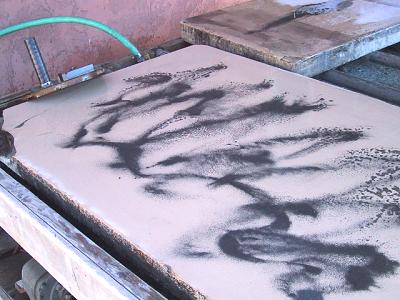
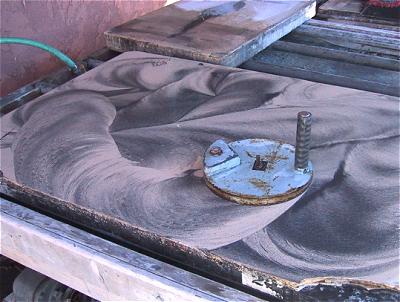
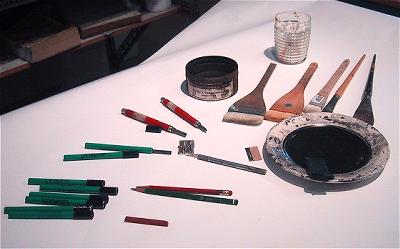
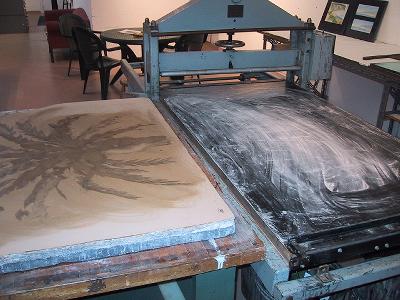
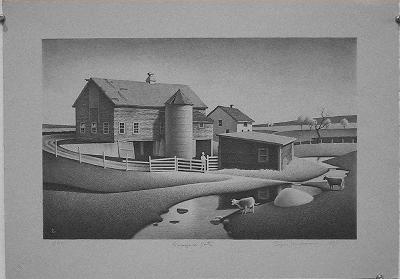
Stone lithography was the first printmaking technology that allowed a traditional artist to work using traditional techniques, and to create prints that could rival an original painting in terms of detail, mood and color variations. Stone lithography was popular for about a century during the 1800s, and is still practiced today by artists and lithography studios.
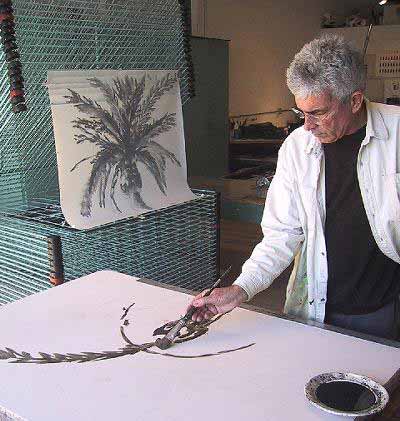
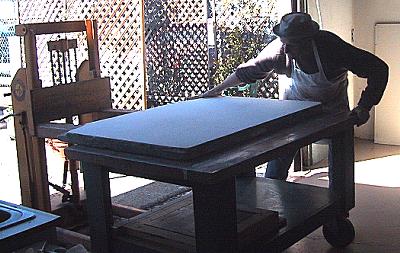
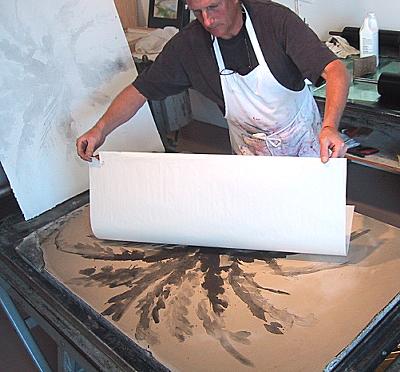
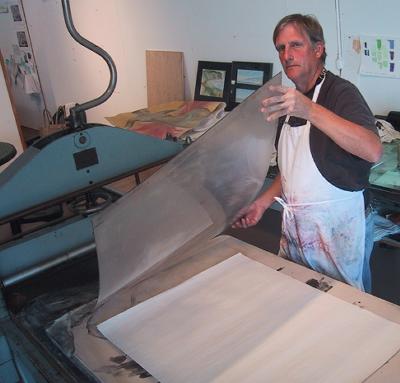
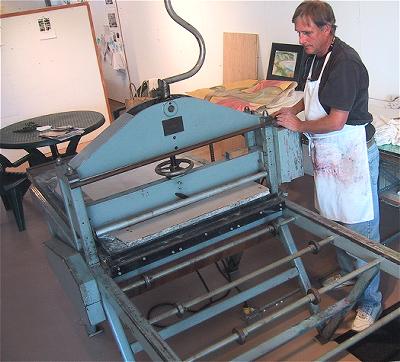
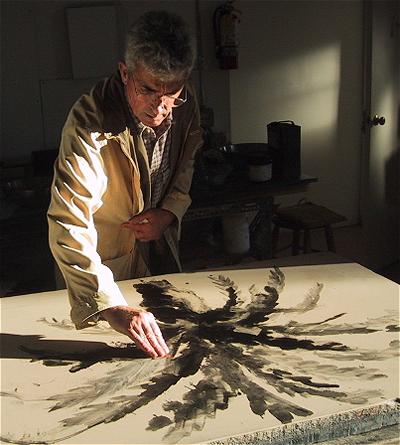
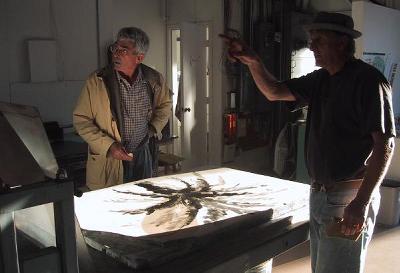
In this article, you will learn about stone lithography techniques by watching the entire process as practiced by Toby Michel of Angeles Press. Toby is a master printer who trained at the Tamarind Institute. Toby, collaborating with artist Peter Alexander, will demonstrate how to create a limited edition print using a technology that is over two centuries old.
Let's start by learning how you can use stone to put ink onto paper.
Advertisement