Is it illegal not to have a name?
Humans love naming things. Gardenias, flamingos, clothespins, you name it. Literally, you name it.
For people, names help to establish our unique place in the world, often summing up in one word our basic personal data of gender, nationality and family history. Whether based on days of week (as with some tribes in Africa), Hopi familial tradition or Jewish religious custom, all cultures have developed naming conventions. And after all that effort, many still tweak their own names into a nickname like Moose or Flash.
But are we legally obligated to have a name? Could we erase it and go with nothing, diving into the ultimate anonymity?
In the United States, going without a name is not inherently illegal. Police won't arrest you for not having a name. But you can't legally identify yourself without one, which would make things difficult for you. For instance, you need a legal name on a birth certificate or social security card to obtain a driver's license or passport, open a bank account and get a job.

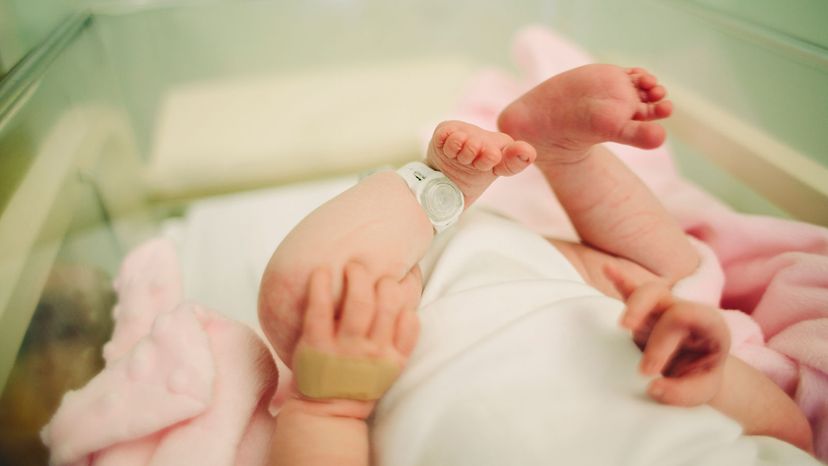
Tom Grill/Getty Images
Want one of these? You'll need a legal name to get a passport, driver's license and social security card.
- Intentionally confusing, such as a number
- A vulgar word that could induce fighting, including racial slurs
- Used with fraudulent intent, such as skipping out on unpaid debts
- Someone else's name for the intent of misuse
[source: FindLaw]
Other countries including Australia, Germany and Spain have similar laws regarding first names. That said, you still could not legally change your name to nothing because you would have no acceptable way to verify your identity.
But what about naming babies? Can parents choose to not name their child? Read the next page to find out.
Naming Babies
The initial fate of whether you will be christened Zoey, Zelda or another name lies in the hands of your parents. Generally, at hospitals once a woman has given birth, a volunteer or staff person will stop by her room to help with filling out birth certificate information, including a first and last name. Local jurisdictions oversee the filing of birth certificates with the state, so the rules for when or where someone must register a birth vary from place to place.

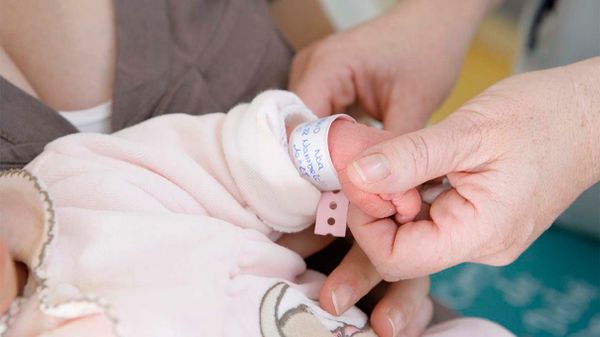
Photodisc/Getty Images
Blake? Henry? Jeffrey? Hospital staff urges new mothers to complete birth certificate information before
leaving the hospital.
In the United States, no matter where a woman gives birth, she is legally obligated at some point to report it to the appropriate government entity, usually a department of health and human services or vital records. That entails filling out a first and last name for the child. How long the mother has to fill out that birth certificate varies by state.
The law does not necessarily require them to complete that information at the time of birth [source: Ihara]. In fact, the parents of U.S. Olympic gold medalist skier Picabo Street didn't name her at all. She simply chose it herself when she was 3 years old, having been called Baby Girl until then.
Although naming customs for babies differ across the world, all countries have some sort of vital records collection, whether centrally or locally controlled [source: Kemp]. In fact, Article 7 of the United Nations Convention on the Rights of a Child states that all children have a "right from birth to a name" [source: United Nations].
Australia: Jack, Emily |
In spite of customs and regulations, research has shown that baby's names do not dramatically affect their success as adults. Instead, according to a study published in the book "Freakonomics," name choices reflect more on the parents than on the children [source: Cabot]. For example, in the U.S., Misty and Joey correlated to parents with lower education levels while Dov and Lucienne came from more educated groups. Likewise, a socially undesirable name does not foreshadow a lackluster future for the person [source: Flora]. Nevertheless, for the three babies reportedly named ESPN after the sports television station in 2006 [source: Associated Press], going through role call at school might not be a cakewalk.
For more information on identity, read the links on the next page.
Lots More Information
Related HowStuffWorks Articles
- How Identity Theft Works
- How can I erase my identity and start over?
- How Pregnancy Works
- How Social Security Numbers Work
- How Passports Work
- How Fingerprints Work
More Great Links
Sources
- Associated Press. "New Zealand: '4Real' not a name." USA Today. June 22, 2006. (April 23, 2008)
http://www.usatoday.com/news/offbeat/2007-06-22-name_N.htm - Benson, Ciaran; Inc NetLibrary. "The Cultural Psychology of Self." Routledge. 2001. (April 23, 2008)
http://books.google.com/books?id=wgUOAAAAQAAJ - Bryne, Deidre. "The World's Most Popular Names." Parenting.com. (April 23, 2008)
http://www.parents.com/pregnancy/baby-names/themes/
the-worlds-most-popular-names/?page=2 - Cabot, Tyler. "Baby Names." The Atlantic. June 2005. (April 23, 2008)
http://www.theatlantic.com/doc/200506/cabot - Flippo, Hyde. "The German Way." McGraw Hill. 1996. (April 29, 2008)
http://books.google.com/books?id=4A5Ka1V597UC&q=the+
germany+way&dq=the+germany+way&pgis=1 - Flora, Carlin. "Hello, My Name is Unique." Psychology Today. March/April 2004. (April 23, 2008)
- Ihara, Toni; Ihara, Toni Lynne; Warner, Ralph E; Hertz, Frederick. "Living Together: A Legal Guide for Unmarried Couples." Nolo. 2006.
http://books.google.com/books?id=Fk-AolTdMJQC - Stringer, Kortney. "Leaving Tradition Behind: Brand-named babies." Knight Ridder Tribune Business News. June 12, 2006. (April 23, 2008)
- Tembo, Mwizenge. "Zambian traditional names." Julubbi Enterprises Limited. 2006. (April 29, 2008)
http://books.google.com/books?id=56pPheM9hpMC&pg=
PA6&dq=international+baby+naming+customs&lr=&sig=7OlStgY_
rYQ59BZFaaNXr51t2rQ#PPA4,M1