The Human Side

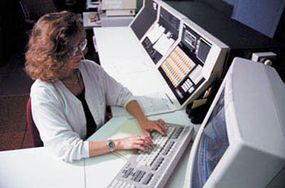
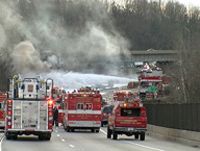
Emergency 9-1-1 responders
Photo courtesy U.S. Department of Transportation
It may seem like a simple thing to determine when to call 9-1-1, but some PSAPs report between 15 and 20 percent of incoming calls as non-emergencies. So, what's a 9-1-1 emergency? A 9-1-1 emergency is a life-threatening situation in which every second counts. This includes serious medical issues, like a heart attack, uncontrolled asthma attack, seizure, child birth in progress, or anything involving large amounts of blood; any uncontained fire; and a life-threatening event like a knife fight outside a bar, an armed robbery in progress or a serious car accident (not a fender bender). Property theft is not considered an emergency, so if the armed robber has already left the scene, you can just look up the number for the police department instead of calling 9-1-1, since lives are no longer in danger. Neither a flat tire, a drunk person passed out in your bushes nor a serious desire to talk to someone about your recent divorce is considered a 9-1-1 emergency.

Even when there is a legitimate emergency and a caller is right to call 9-1-1, the call doesn't always go smoothly. Some mistakes that callers make include calling 9-1-1 and then leaving the phone or just hanging up, assuming the operator has all the necessary information when in fact he or she may have no information at all. Callers often hang up too soon during a call, causing the call-taker to have to call back to confirm details and make sure help has arrived. One big but often unavoidable problem occurs when the caller is hysterical and the call-taker can't understand what the caller is saying, in which case obtaining accurate information takes a lot longer than usual. And sometimes, callers don't pay enough attention to their environment to provide the location information the call-taker needs.

In June 2006 in Pennsylvania, six-year-old Brandon Bennett got it right. He watched his grandmother go into diabetic shock and immediately called 9-1-1, putting in motion the series of events that would save her life. With the help of the 9-1-1 call-taker, Brandon made a proper 9-1-1 call, which looks something like this:

  • Dial 9-1-1 and wait for operator to pick up. The operator will say, "911. What's your emergency?"
  • Stay on the line, speak clearly and follow the operator's instructions.
  • If possible, be aware of your surroundings so you can tell the operator exactly what's happening and where it's happening. The more information a call-taker has, the better he or she can help you by sending exactly the response team and equipment you need.
  • Don't hang up until the call-taker tells you to -- if you hang up too early, before the issue is resolved or before the call-taker knows that emergency personnel have arrived, she'll just have to call you back.

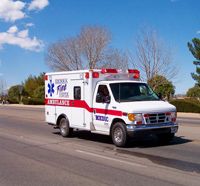
Emergency response ambulance
Photo courtesy Morguefile/Michael J Summerville
Call-takers are trained to ask the right questions, calm hysterical callers and get emergency personnel to the scene as quickly as possible. In an emergency situation, none of these is necessarily an easy task. In May 2006 in Warrensburg, Missouri, a 9-1-1 call-taker picked up a call and heard nothing but a barely audible "Help me, help me." This went on for five minutes while the call-taker was trying to get some sort of information from a clearly debilitated caller so he could send help. The caller was using a cell phone, and this PSAP had not yet implemented Phase II, so the call-taker had nothing but a very vague general location and a call-back number. Five minutes into the call, all communication stopped. It sounded like the caller had lost consciousness.

The operator remained diligent. He stayed on the line for 20 minutes, listening intently to nothing but some background noise and, finally, a smoke alarm, until the woman regained consciousness for long enough to provide some partial address information. The call-taker dispatched emergency personnel to the apartment building the woman indicated, and they knocked on doors until they heard their own knocking through the radio link to the PSAP. They found the right apartment and rescued a 21-year-old, unconscious pregnant woman who likely would have died from smoke inhalation if she'd remained undiscovered for much longer. An unattended pot on the stove had filled the apartment with smoke and was ready to produce a fire at any minute.

Abusing the System

  • The Greater Harris County PSAP in Texas reports that about 16 percent of all 911 calls are non-emergencies.
  • If you call by mistake, don't just hang up! PSAPs have a policy that the call-taker needs to call you back to confirm that there's no emergency. Hanging up just wastes more time on your non-emergency and ties up a line that could be needed by someone with a real crisis.
  • Intentional abuses and mistake calls resulting in a hang up are considered prank calls and in most areas are illegal. They typically result in a fine if the PSAP decides to pursue the matter.
  • Call-takers need to be able to handle a tremendous variety of issues with patience and expertise. They receive training in crisis response not only in terms of demeanor, but also in crisis management tools and in the actual things that need to happen when police, fire and paramedics respond to an emergency. The 9-1-1 call-takers know what they need to ask in order to get the first responders there safely and fully equipped to handle the situation. Further training may involve:
    • 9-1-1 technology and equipment
    • police, fire and EMS procedures
    • questioning techniques
    • hazardous materials (what are they, where might they be and how would the caller be able to identify them)
    • legal liability issues
    • radio verbalization
    • cross-cultural issues (knowing what to expect and how to respond to callers from different cultural backgrounds)
    • stress management
    Even with extensive training, call-taker mistakes happen. And when the mistake is regarding a 9-1-1 call, the consequences can be devastating. One instance of 9-1-1 human error that received national attention is that of the 9-1-1 calls made by a five-year-old boy in Detroit in February 2006. Robert Turner called 9-1-1 when his mom, Sherrill Turner, collapsed from heart problems. The call-taker thought he was making a prank call and asked for an adult, and when Robert said he couldn't get an adult on the phone, the call-taker said she'd send help and hung up. But help didn't arrive. Three hours later, his mom still unconscious, Robert called 9-1-1 again. This time, a different call-taker answered, but it was the same result -- the call-taker thought it was a kid playing around, and she told him he'd get in trouble if he kept it up. Robert got scared and hung up. His mom died, although no one is sure exactly when. Both operators have been indicted on charges of willful neglect of duty and could face jail time. Robert's family is filing a wrongful death suit against the city because they believe that if the first operator had properly responded to Robert's call, Sherrill Turner would still be alive.

    Not all call-taker mistakes are so devastating and unimaginable, but the fact is, when someone calls 9-1-1 and the person who picks up is not on the ball, bad things are going to happen. In Astoria, Oregon, in October 2005, a call-taker dismissed a call reporting a fire -- she simply asserted there was no fire, that it was just "the play of light in the rain and fog." It wasn't until another person called 9-1-1 15 minutes later to report the same blaze that firefighters were dispatched to the area, and by that time there was nothing they could do.

    It's likely that most call-taker mistakes can be attributed to stress. Handling life-threatening emergencies all day is not an easy task, and call-takers can experience severe job-related stress issues. Some eventually suffer from critical incident stress syndrome (CISS), a condition something like post-traumatic stress disorder (PTSD) but it affects people who are constantly close to and intricately involved in other people's massive crises and tragedies. CISS can cause symptoms like severe anxiety, nightmares and an inability to cope with stressful situations in daily life. Most PSAPs offer not only training in stress management, but also have psychologists or social workers available for call-takers who need help dealing with the stress of their job.

    For more information on 9-1-1 and related topics, check out the links on the next page.